
We met after a break in July to do a bat survey of the maternity roost at Upper Woodburn. The bats weren’t going to start emerging until after 830pm so we started the meeting by making a fire of all the rhododendrons we pulled out of the woodland back in the winter. We’d had a special request from one of the members to have another bonfire, which we had previously had back in December at our first rhodie bashing event. With the weather being so unseasonably cold, this seemed like a great idea, but on the day the temperature warmed by about 10 degrees so it was hot work making the fire.

Derek Whittle from the Clyde Bat group joined us just at dusk and talked us through the use of the bat detectors (kindly lent by the RSPB) and what we should expect. The plan was to surround the house with observers with the young people in pairs. Each would record the numbers coming from a section of the house. We found that there were three main holes that bats came out of, with about three other locations. Not everyone had a clicker counter but we found an excellent website which we used to count the bats. Derek explained that this is a maternity roost where the females go to have and to raise their babies. They will vacate the roost by the autumn and move to their winter roosts where they will hibernate. These need to be in cold places so that they can get into hibernation mode, and are often in hollow trees, and outbuildings.
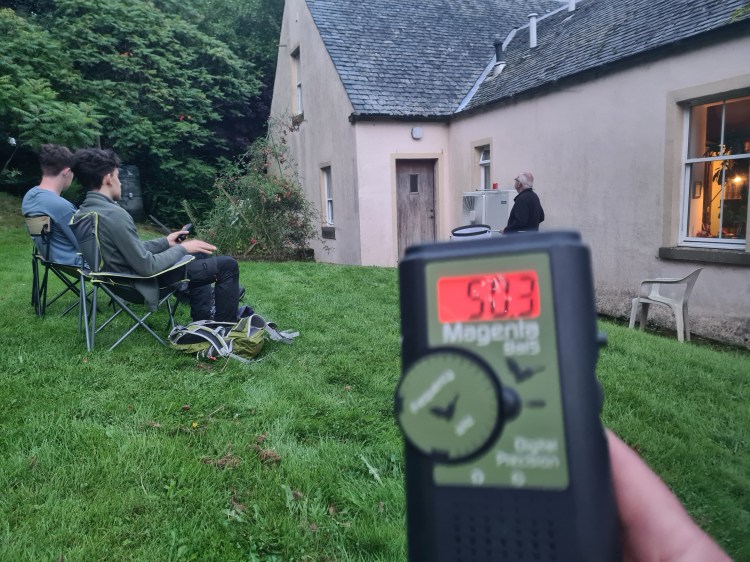
We settled down on our foldable chairs and with midgie repellent and head nets at the ready. The first bats started emerging at around 835pm and the bat detectors told us that the echolocation of the bats was at around 55 Hz which means that the bats are soprano pipistrelles, one of the common species.
The pair at one of the exit holes counted 228 bats, which was by far the most. The total for the house as a whole was 384. However we needed to stop before it was totally dark as it had got so late and the young people needed to go home. However the rate the bats were coming out had slowed down and so there were probably not too many more bats still to come out.
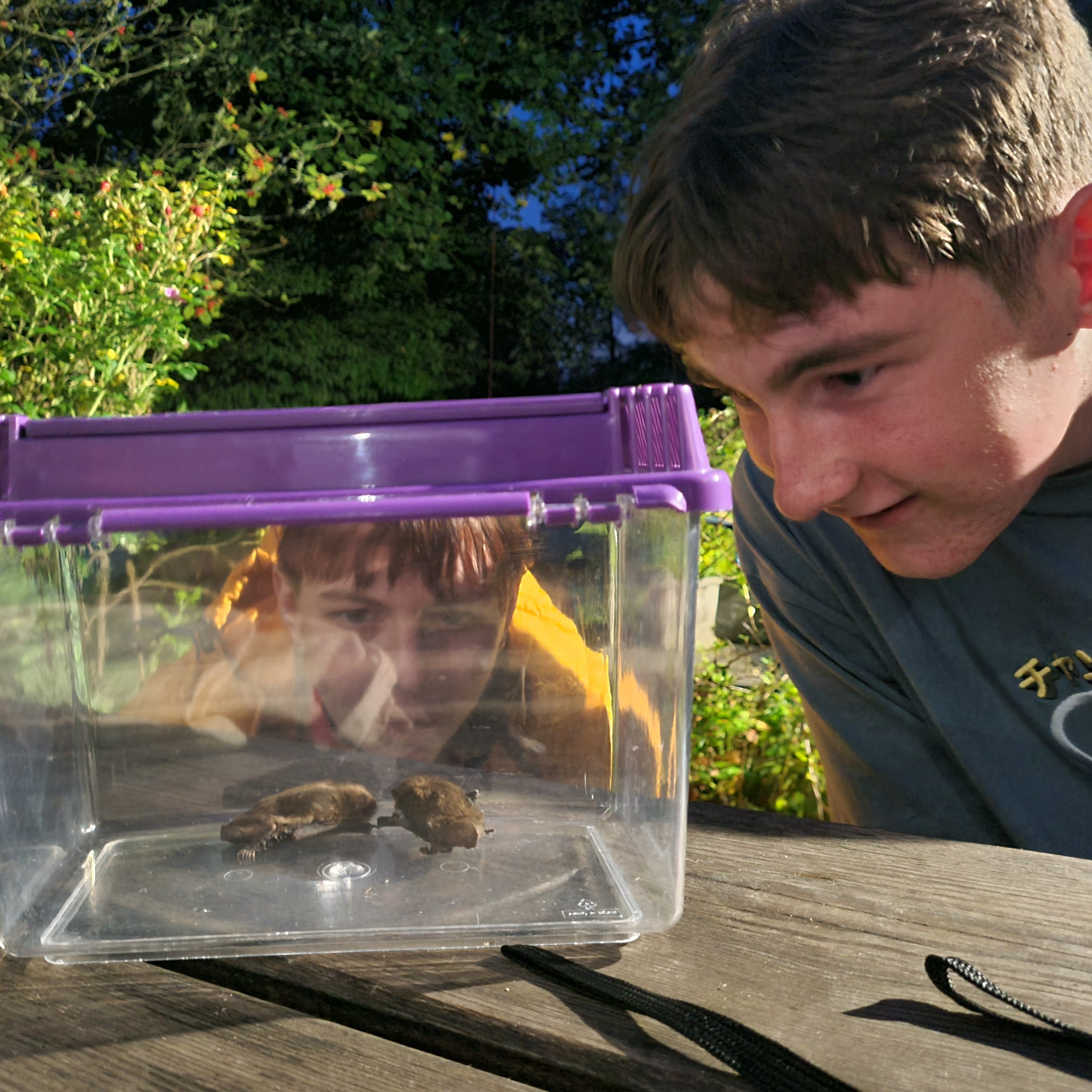
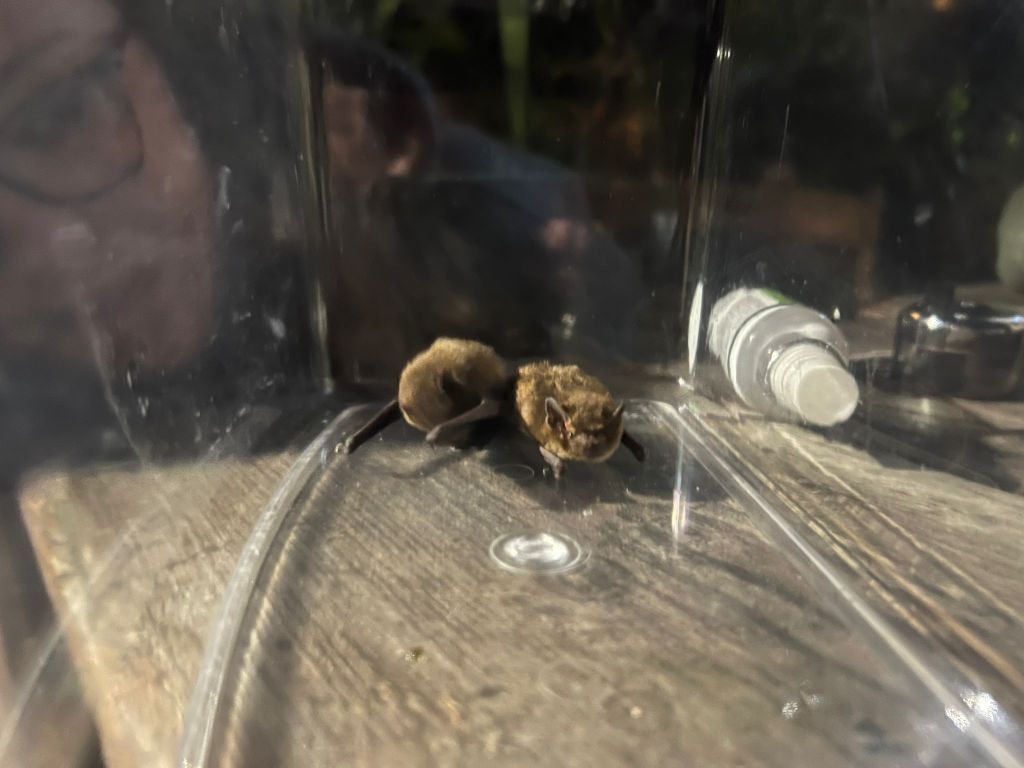
Because Derek is a licenced bat handler, and he is also a bat carer, being able to rehabilitate injured bats, he is able to catch bats to show us for educational purposes. He held a net over the hole the bats were coming out and they dropped into the net as they exited. He caught two as they are very sociable animals and will be less distressed is they are together. We were able to observe the bats at close quarters in a terranium for a few minutes and noted how cute and furry they are close up. On of the NERD club members released the bats and they flew off to join the others.
 Upper Woodburn