It’s been an incredible year for fungi and they are sprouting out everywhere in the woods behind the house. But NERD Club this week was all about grassland fungi – the waxcaps.
This is a group of exquisitely beautiful fungi which, due to the scarcity of ancient grasslands – areas that have been neither ploughed nor fertislised, are really rare.
We were really fortune that Mirte Greve could join us, an ecologist who has discovered the most diverse site for waxcap fungi in Scotland – she has found 31 species in this grassland which is just outside Strathblane, at the foot of the Campsies.
We’re just 9 miles east of that site and also at the foot of the Campsies, but the fields around us have all been improved – ploughed every few years and reseeded with grass, and muck is regularly spread in the summer months. So there would be no waxcaps in those fields – but there are pockets where the ground has been too steep to plough and I wondered whether we could find some wacaps in these refuges.

We set off to find out. Given the weather was rather wet we started indoors and and Mirte explained the basics of fungi ID and showed us how to do spore prints to help with ID.
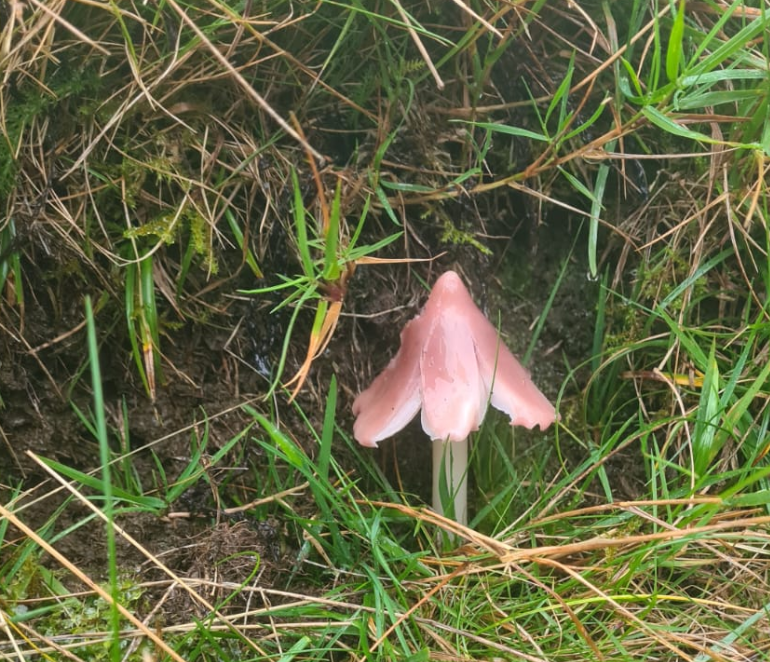
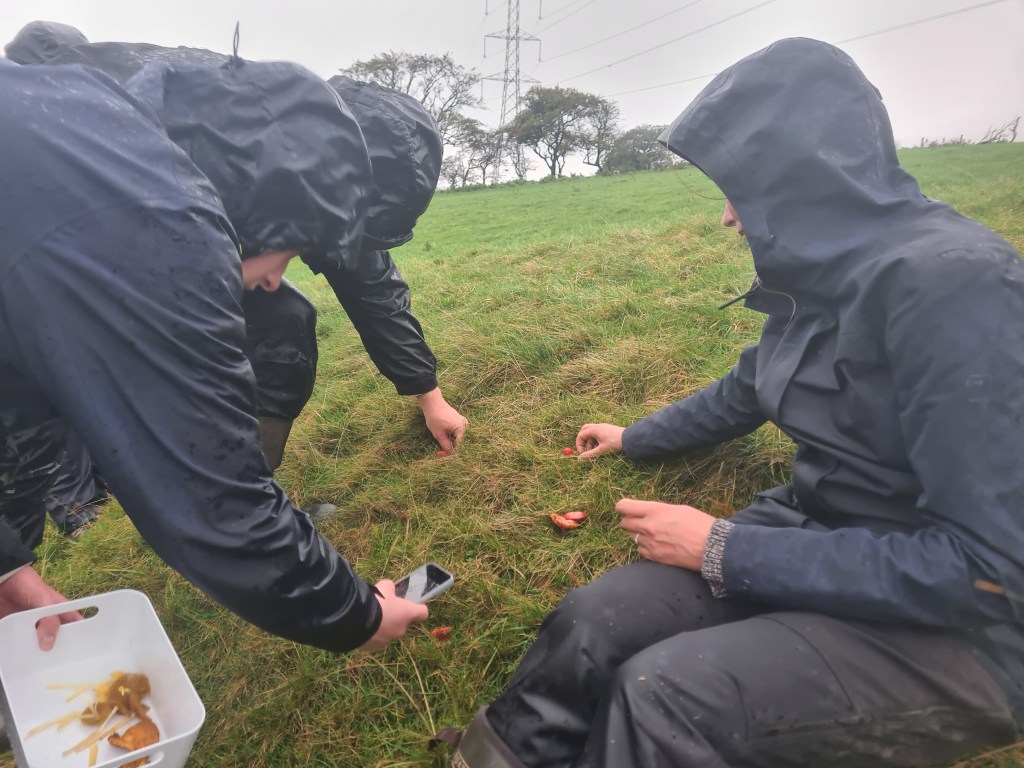
Then we headed off into the rain – a stomp through the wood and over a couple of sheep fields of improved pasture and we reached a few acres of grassland which sloped down to the burn where I had hoped to find them. However thistles covered much of the ground – showing more fertile soil in the areas that muck had washed off the fields above. It was unlikely there would be waxcaps there – but at the top of the slope there were two tiny areas of about 20mx25m each, which were a bit raised at the uphill side which had stopped the runoff and ensured they stayed low nutrient. It was really notable that these were the only areas that the thistles were not growing on and as soon as we reached them we saw waxcaps, first the ruby jewels of the crimson waxcap and then a perfectly formed pink waxcap – also known as the ballerina waxcap – named for its flaring shape, like the skirt of a ballerina.
These two small patches of around a tenth of a hectare seem to be all that remains of all the ancient grassland habitat of the local area – which really explains why the waxcaps are so rare. I think I’ll head out when the weather improves to see if any other small patches of ancient grassland might remain elsewhere – I can see this becoming a bit of an obsession.
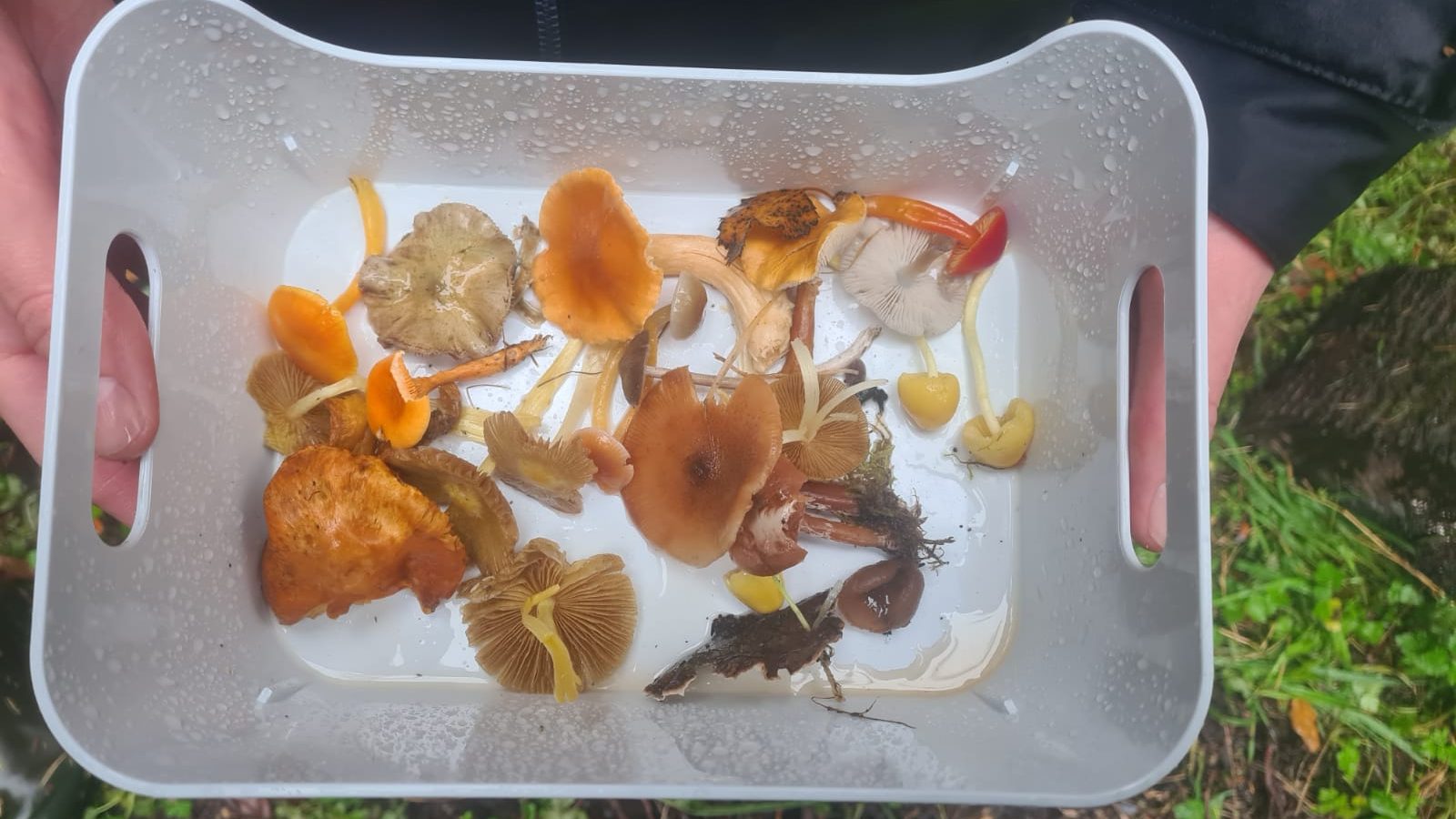
Back at the house and drying out the NERD members looked in more detail at the waxcaps we had collected – using a key to identify them. We had found 6 species and we will be reporting them to Plantlife’s Waxcap Watch 2025
- Crimson waxcap
- Butter waxcap
- Golden waxcap
- Pink or Ballerina waxcap
- Heath waxcap
- Meadow waxcap
and a couple of other grassland fungi.
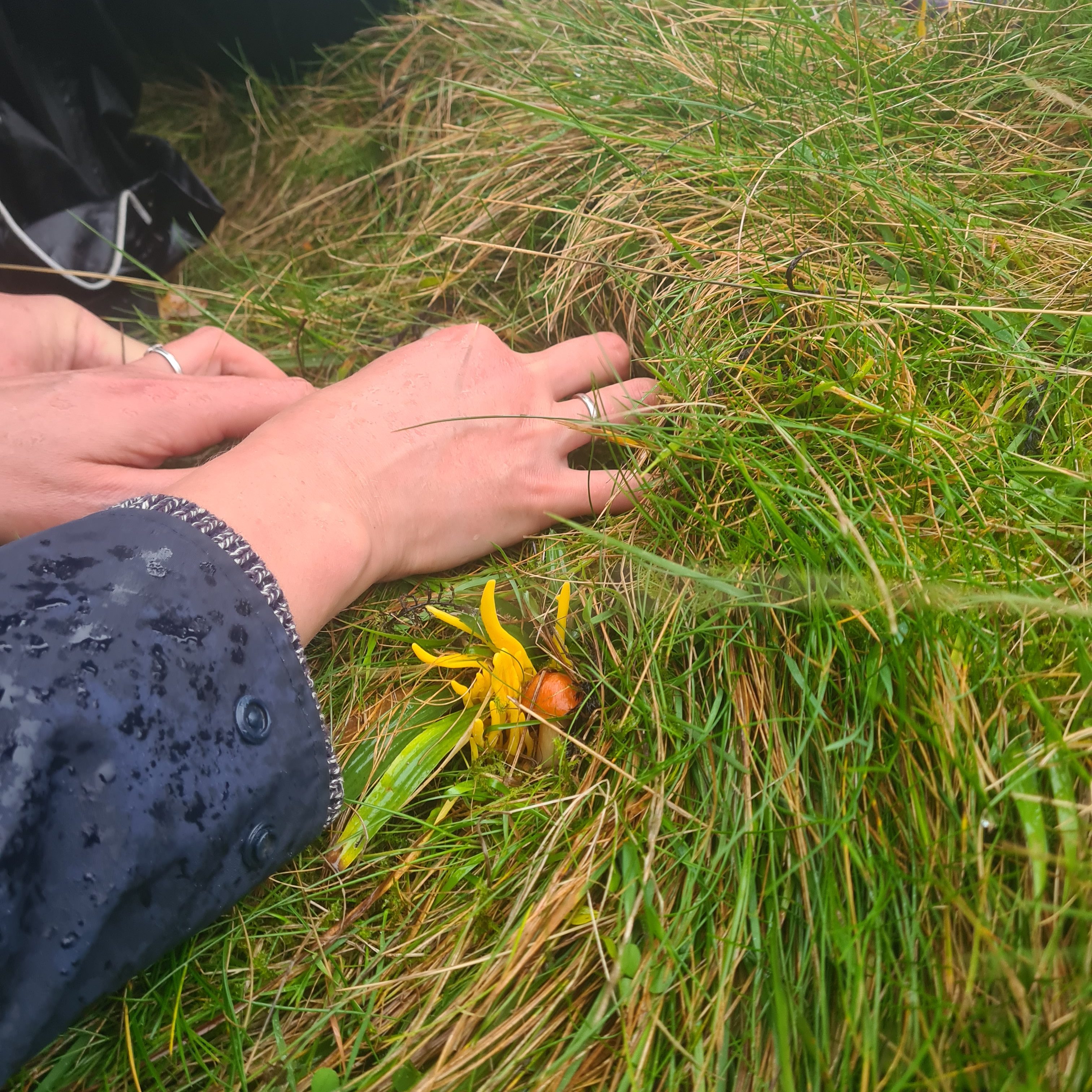
- Golden Spindle
- Handsome Club
Nothing compared to Mirte’s site but she suggested heading out every couple of weeks as new species come up at different times of year. Armed with the useful ID guides with the key Mirte gave us at the end of the meeting – perhaps we will!

 Upper Woodburn