Waxcaps in the rain

It’s been an incredible year for fungi and they are sprouting out everywhere in the woods behind the house. But NERD Club this week was all about grassland fungi – the waxcaps.

This is a group of exquisitely beautiful fungi which, due to the scarcity of ancient grasslands – areas that have been neither ploughed nor fertislised, are really rare.
We were really fortune that Mirte Greve could join us, an ecologist who has discovered the most diverse site for waxcap fungi in Scotland – she has found 31 species in this grassland which is just outside Strathblane, at the foot of the Campsies.

We’re just 9 miles east of that site and also at the foot of the Campsies, but the fields around us have all been improved – ploughed every few years and reseeded with grass, and muck is regularly spread in the summer months. So there would be no waxcaps in those fields – but there are pockets where the ground has been too steep to plough and I wondered whether we could find some wacaps in these refuges. 

Waxcap ID at the kitchen table

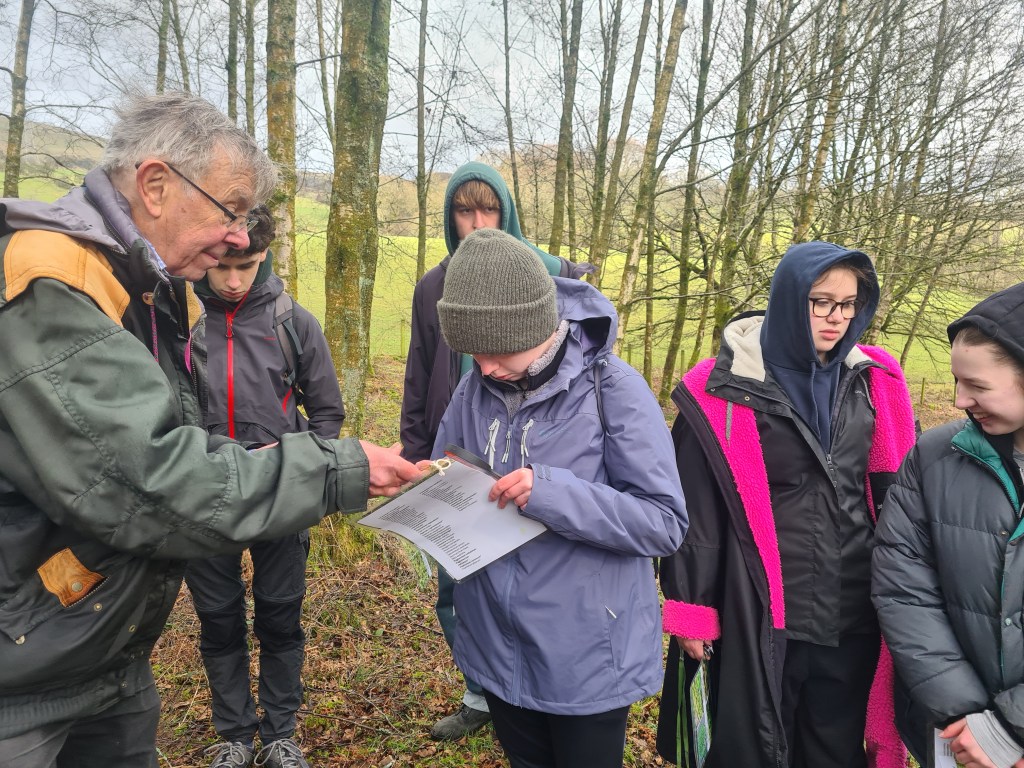
We set off to find out. Given the weather was rather wet we started indoors and and Mirte explained the basics of fungi ID and showed us how to do spore prints to help with ID. 

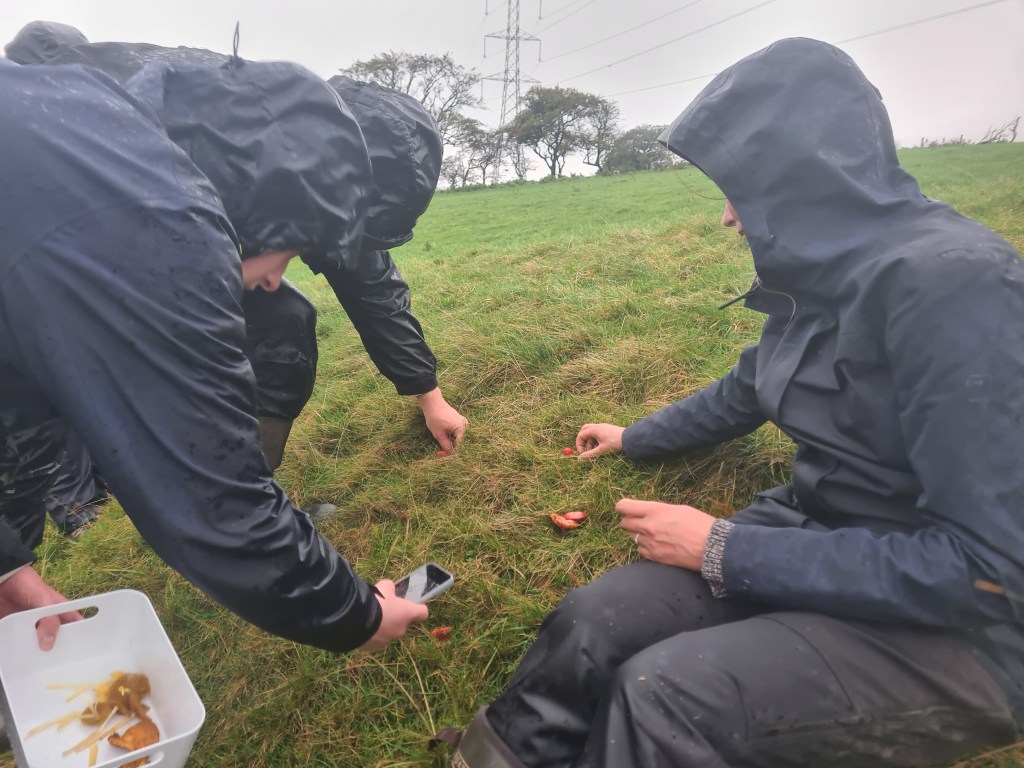
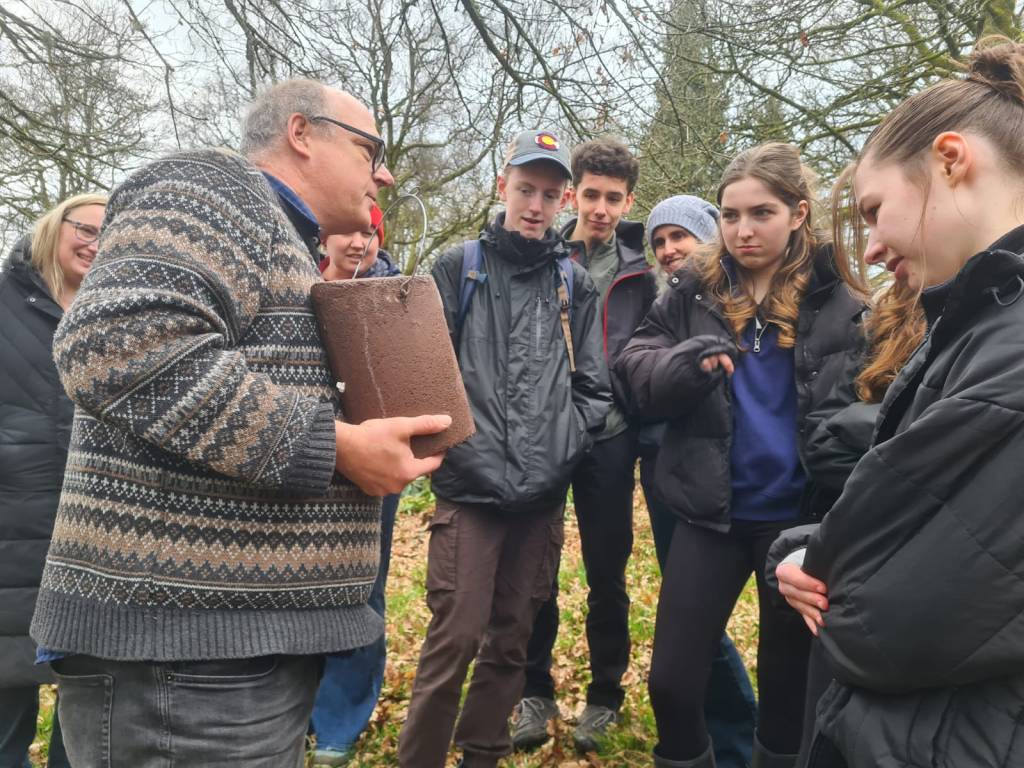
Then we headed off into the rain – a stomp through the wood and over a couple of sheep fields of improved pasture and we reached a few acres of grassland which sloped down to the burn where I had hoped to find them. However thistles covered much of the ground – showing more fertile soil in the areas that muck had washed off the fields above. It was unlikely there would be waxcaps there – but at the top of the slope there were two  tiny areas of about 20mx25m each, which were a bit raised at the uphill side which had stopped the runoff and ensured they stayed low nutrient. It was really notable that these were the only areas that the thistles were not growing on and as soon as we reached them we saw waxcaps, first the ruby jewels of the crimson waxcap and then a perfectly formed pink waxcap – also known as the ballerina waxcap – named for its flaring shape, like the skirt of a ballerina.
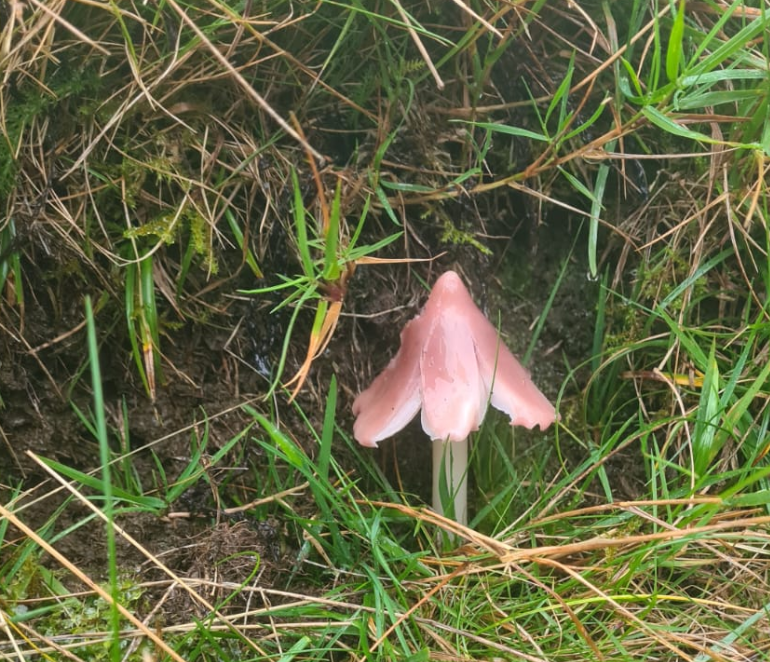
Ballerina, or Pink, waxcap

 These two small patches of around a tenth of a hectare seem to be all that remains of all the ancient grassland habitat of the local area – which really explains why the waxcaps are so rare. I think I’ll head out when the weather improves to see if any other small patches of ancient grassland might remain elsewhere – I can see this becoming a bit of an obsession.

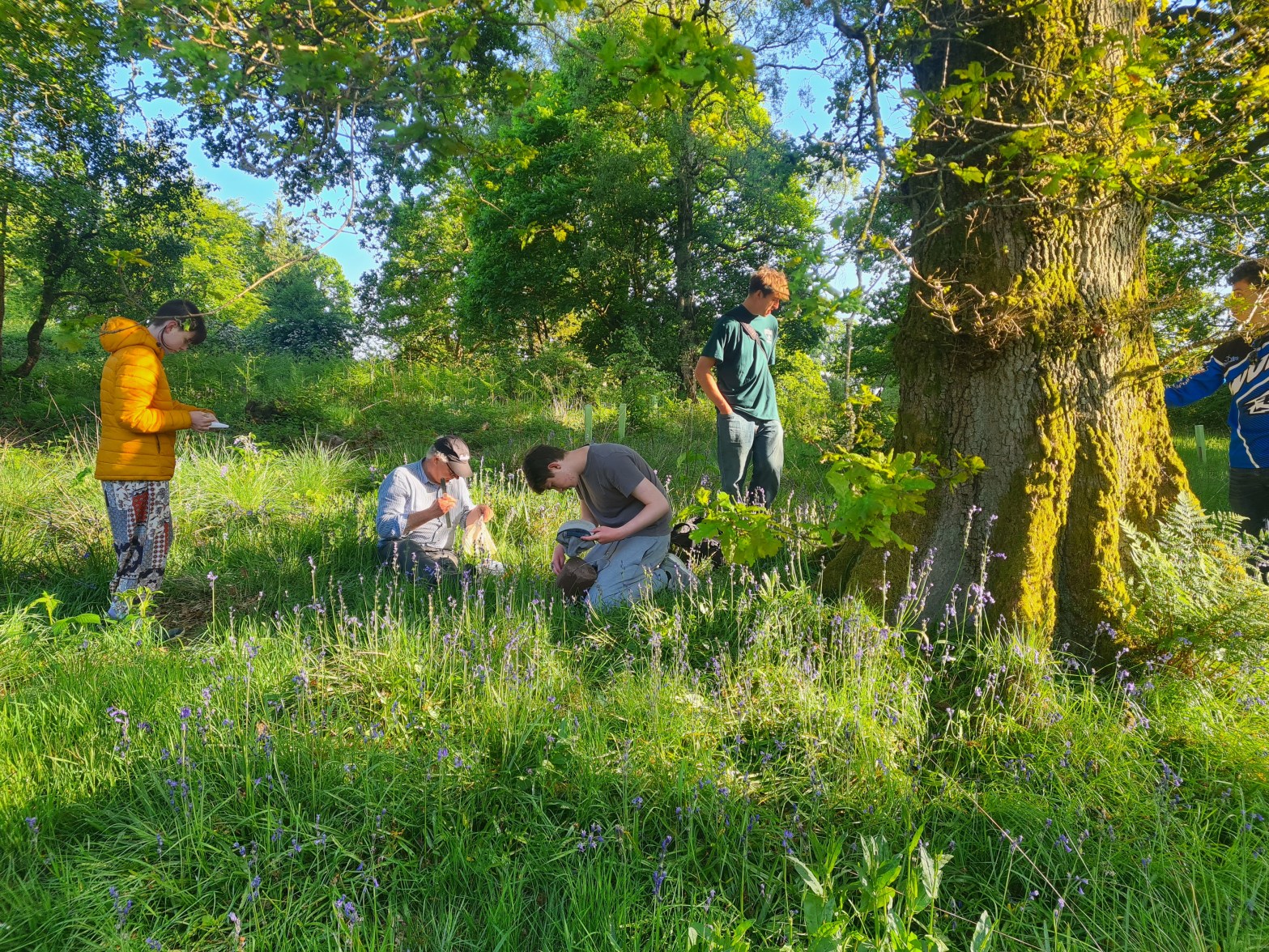
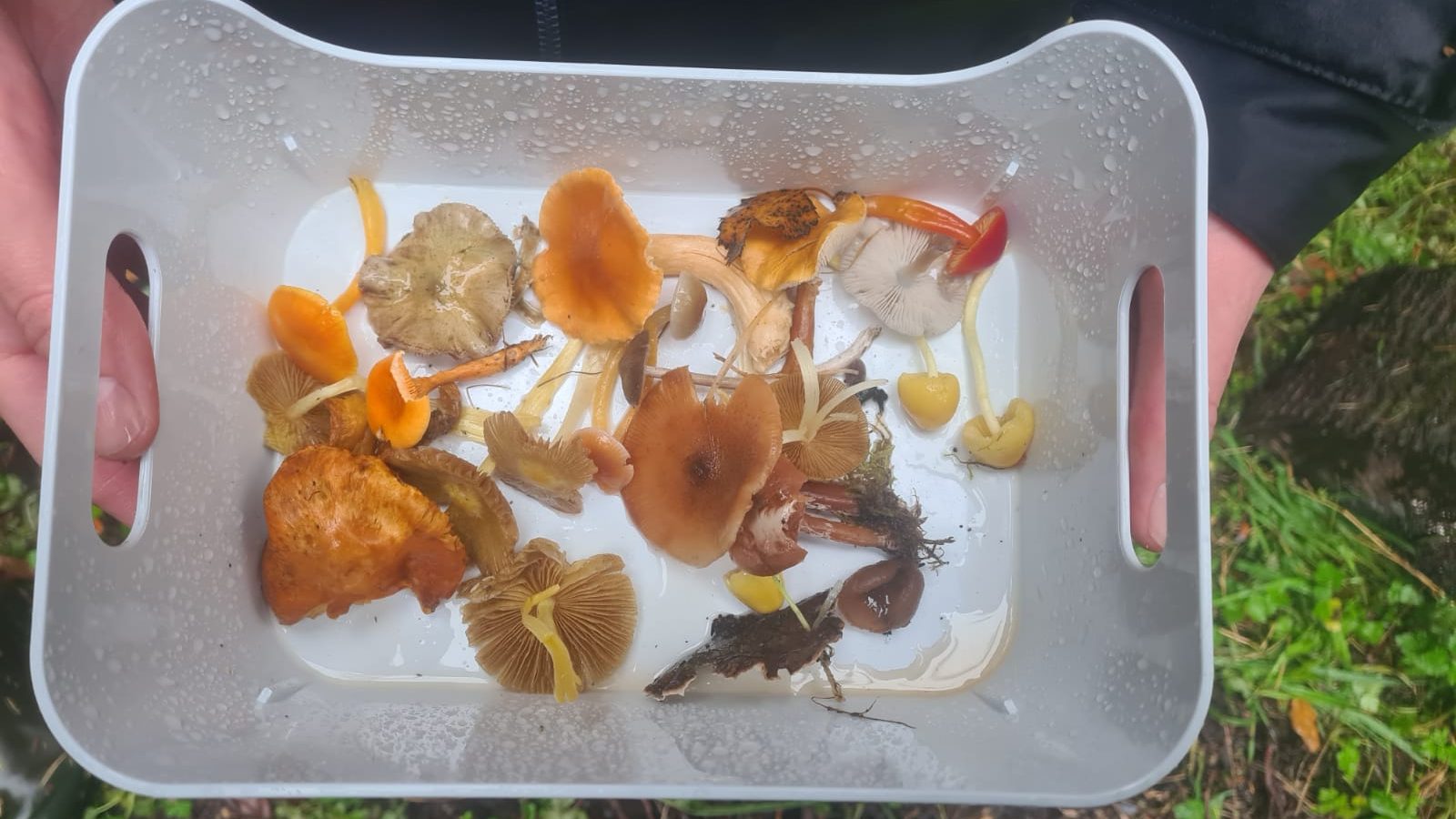
Back at the house and drying out the NERD members looked in more detail at the waxcaps we had collected – using a key to identify them.  We had found 6 species and we will be reporting them to Plantlife’s Waxcap Watch 2025

  • Crimson waxcap
  • Butter waxcap
  • Golden waxcap
  • Pink or Ballerina waxcap
  • Heath waxcap
  • Meadow waxcap

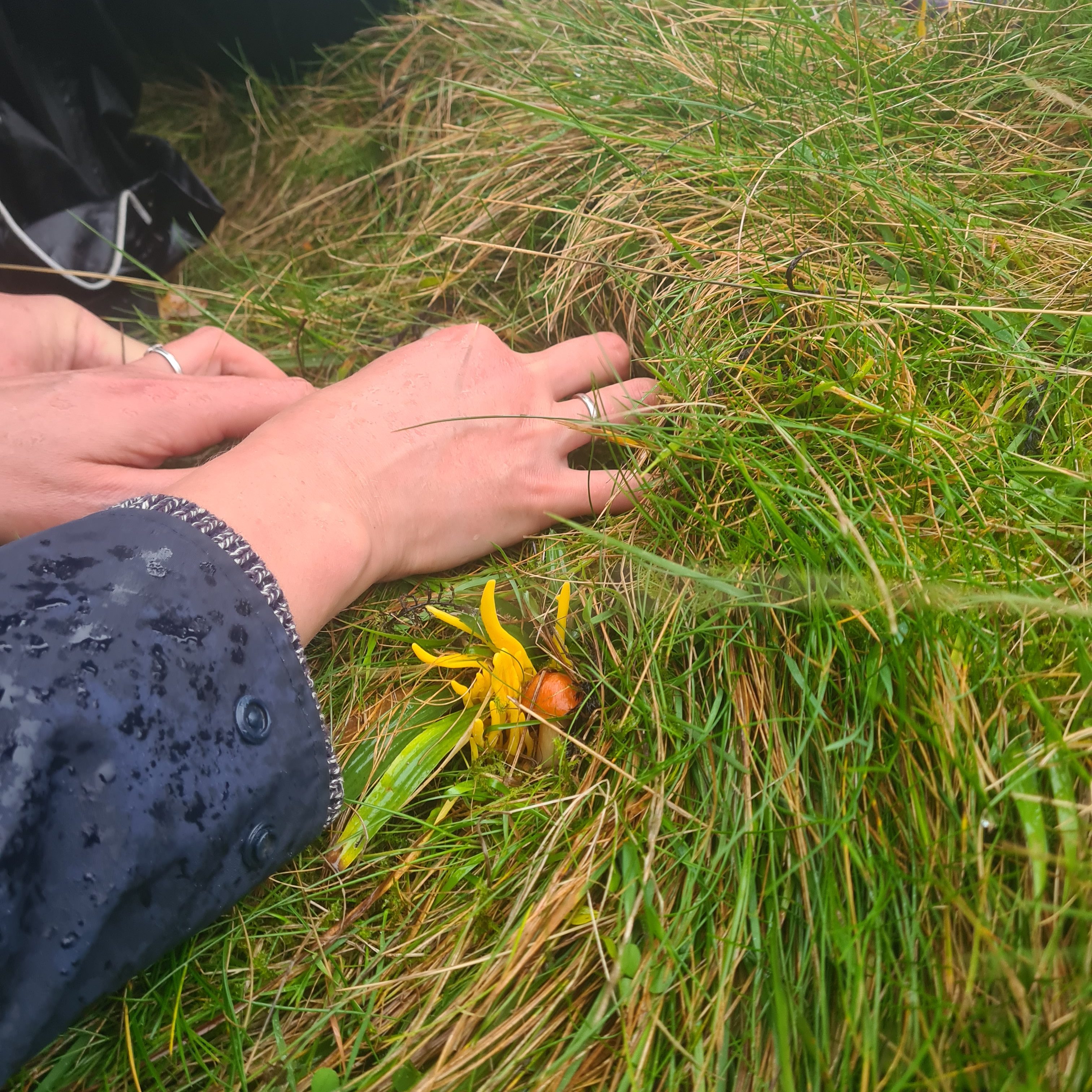
and a couple of other grassland fungi.

  • Golden Spindle
  • Handsome Club

Nothing compared to Mirte’s site but she suggested heading out every couple of weeks as new species come up at different times of year. Armed with the useful ID guides with the key Mirte gave us at the end of the meeting – perhaps we will!

Bat survey and burning stuff

We met after a break in July to do a bat survey of the maternity roost at Upper Woodburn. The bats weren’t going to start emerging until after 830pm so we started the meeting by making a fire of all the rhododendrons we pulled out of the woodland back in the winter. We’d had a special request from one of the members to have another bonfire, which we had previously had back in December at our first rhodie bashing event. With the weather being so unseasonably cold, this seemed like a great idea, but on the day the temperature warmed by about 10 degrees so it was hot work making the fire.

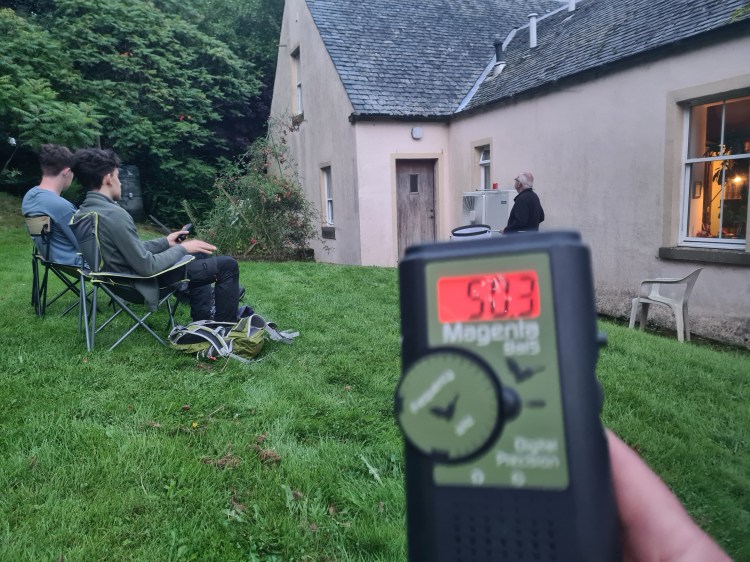
Derek Whittle from the Clyde Bat group joined us just at dusk and talked us through the use of the bat detectors (kindly lent by the RSPB) and what we should expect. The plan was to surround the house with observers with the young people in pairs. Each would record the numbers coming from a section of the house. We found that there were three main holes that bats came out of, with about three other locations. Not everyone had a clicker counter but we found an excellent website which we used to count the bats. Derek explained that this is a maternity roost where the females go to have and to raise their babies. They will vacate the roost by the autumn and move to their winter roosts where they will hibernate. These need to be in cold places so that they can get into hibernation mode, and are often in hollow trees, and outbuildings.

We settled down on our foldable chairs and with midgie repellent and head nets at the ready. The first bats started emerging at around 835pm and the bat detectors told us that the echolocation of the bats was at around 55 Hz which means that the bats are soprano pipistrelles, one of the common species.

The pair at one of the exit holes counted 228 bats, which was by far the most. The total for the house as a whole was 384. However we needed to stop before it was totally dark as it had got so late and the young people needed to go home. However the rate the bats were coming out had slowed down and so there were probably not too many more bats still to come out.

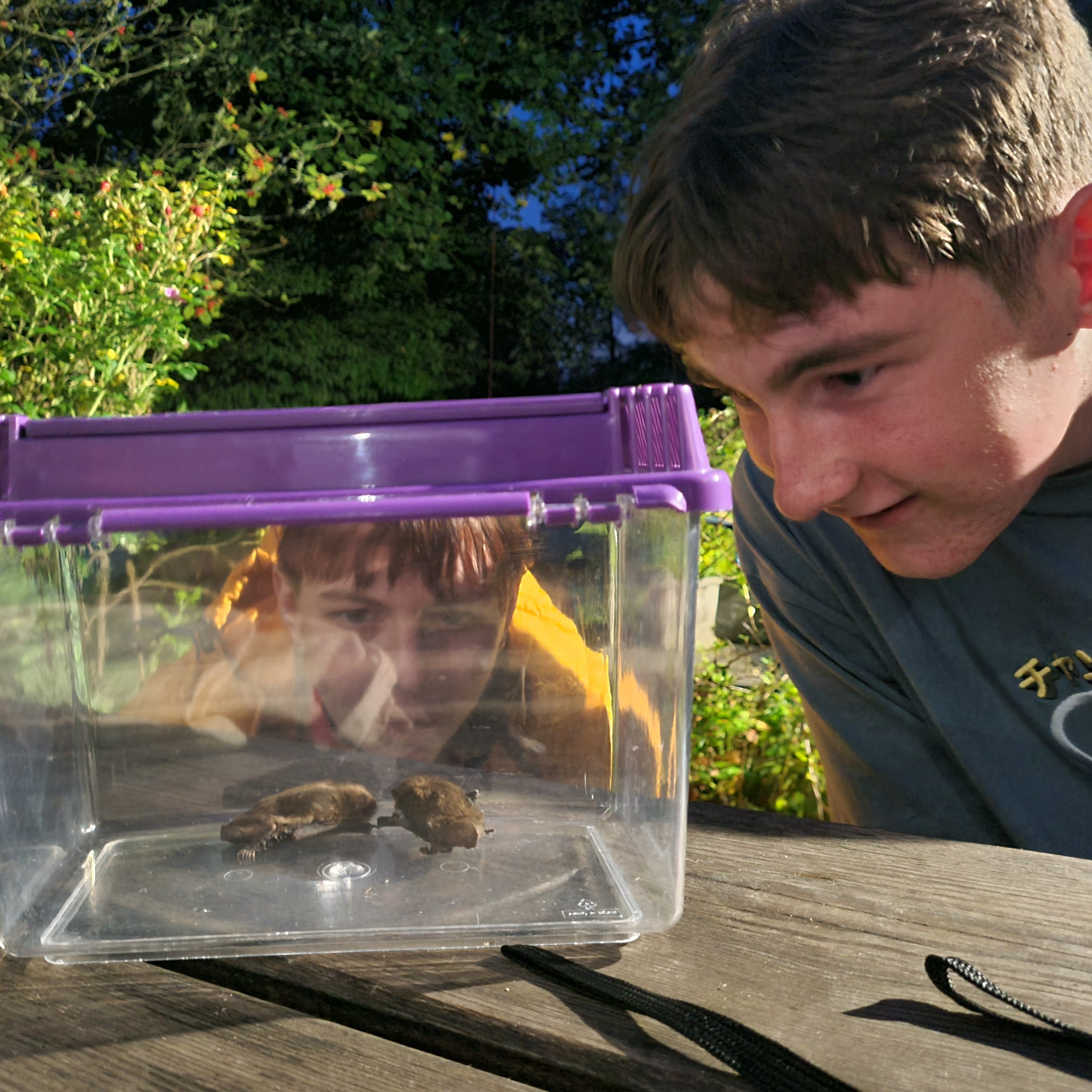
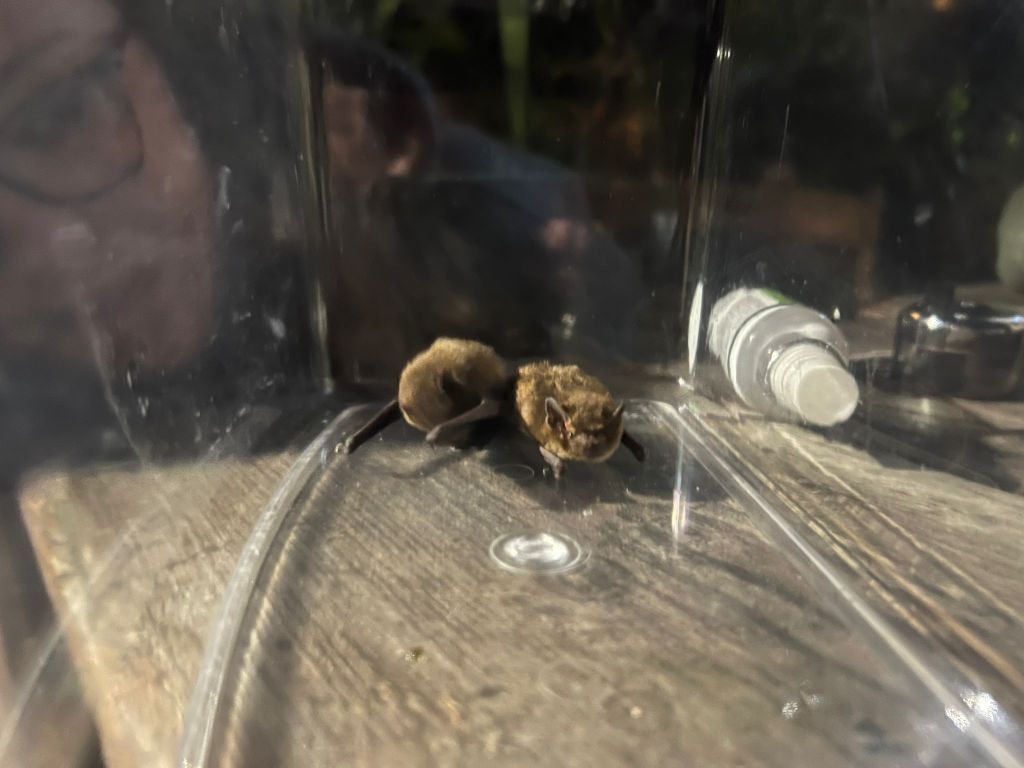
Because Derek is a licenced bat handler, and he is also a bat carer, being able to rehabilitate injured bats, he is able to catch bats to show us for educational purposes. He held a net over the hole the bats were coming out and they dropped into the net as they exited. He caught two as they are very sociable animals and will be less distressed is they are together. We were able to observe the bats at close quarters in a terranium for a few minutes and noted how cute and furry they are close up. On of the NERD club members released the bats and they flew off to join the others.

photo by a NERD Club member

video of bats in a terranium taken by a NERD Club member

Final nest box checks and a baby roe deer

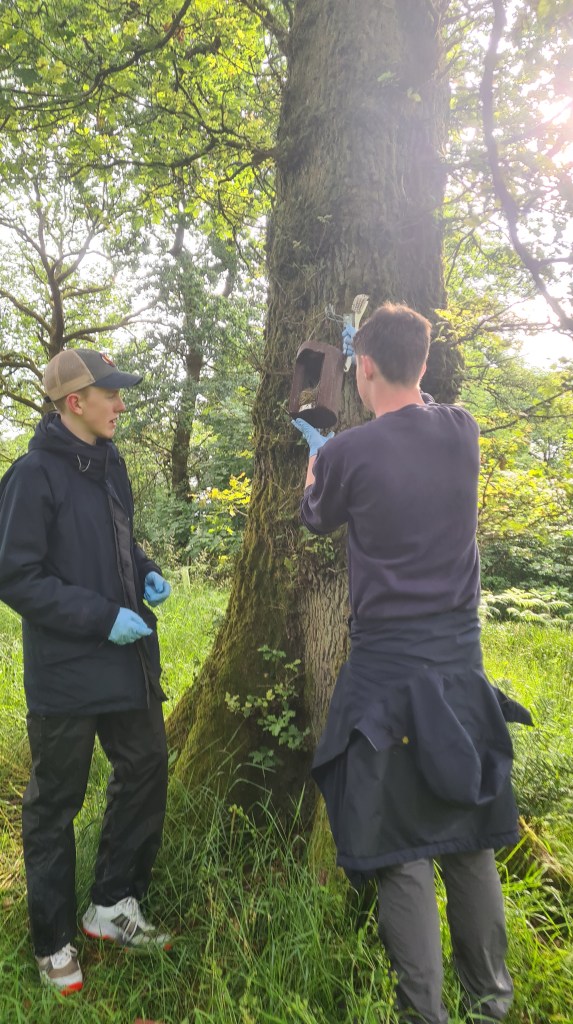
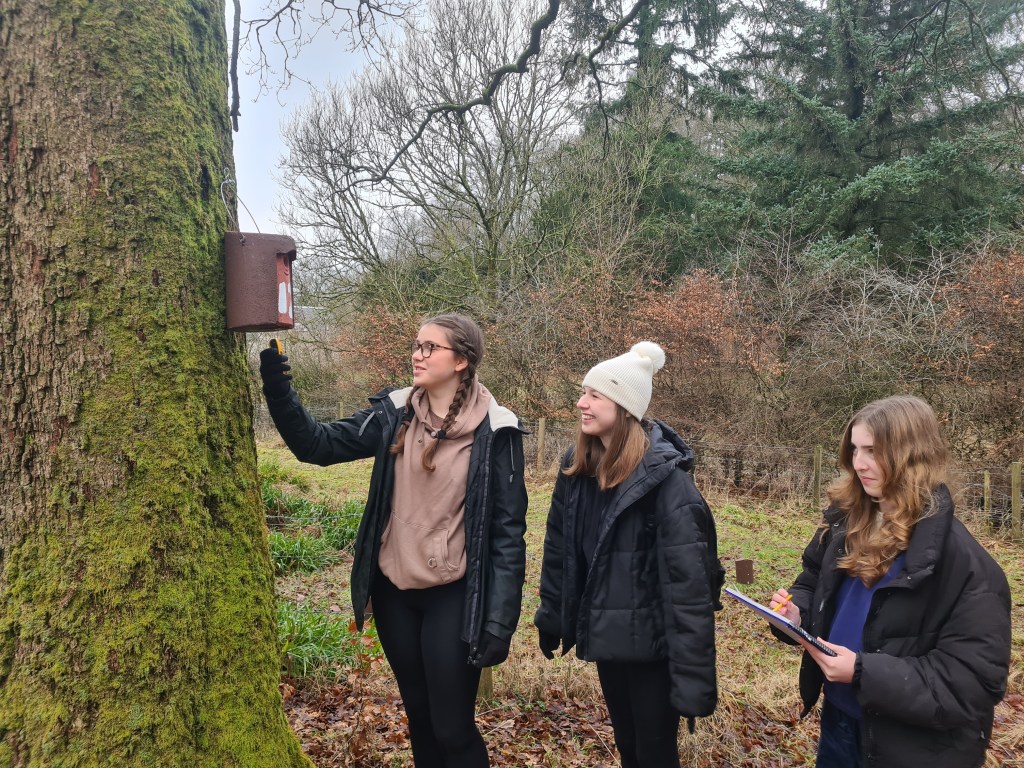
For our last meeting before the summer break we  did a final clear of of the nestboxes. This was to check for unhatched eggs and any chicks that didn’t make it to fledging. We only found one dead chick fortunately, it was the small one in box 4 that we were worried may not make it at the time that we ringed it. We had to read the ring number to confirm that and add to the ringing  records.

clearing out the nest boxes at the end of the season is an important job to check if any chicks failed to fledge

After clearing out the nest boxes, leaving those which had tree sparrow nests, in case they were planning further broods (tits are limited in their nesting time to one brood to coincide wit the caterpillars on the first flush of oak leaves) we headed up to the woods to do some more bracken control.

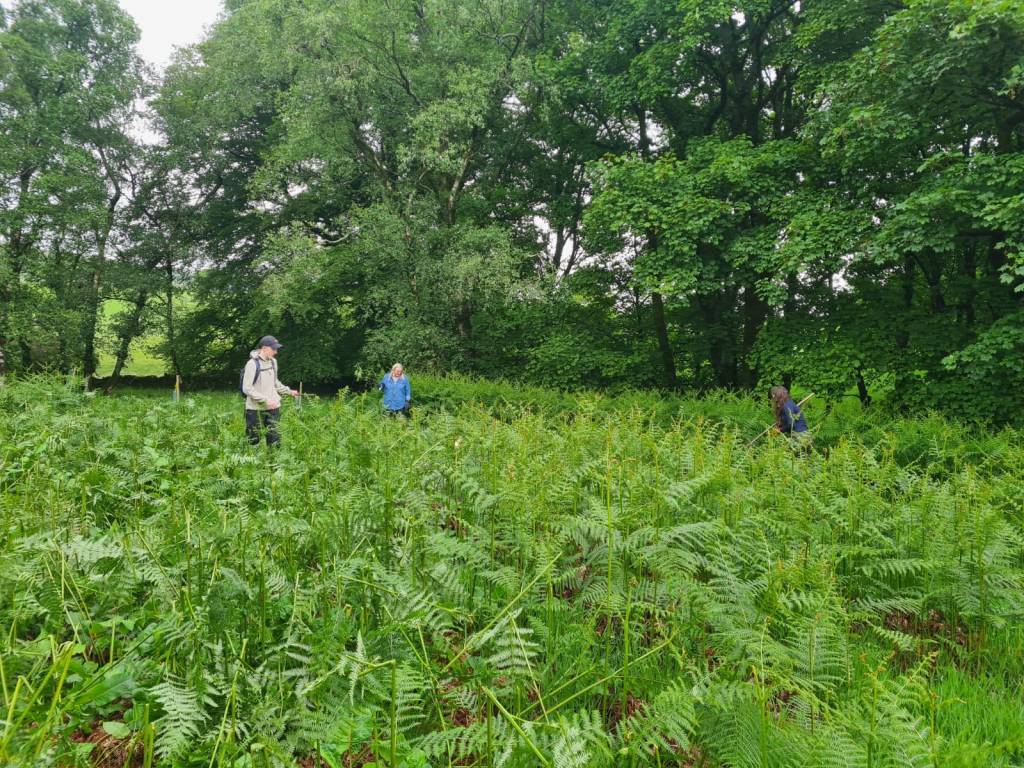
We concentrated on clearing the bracken from the areas we had planted oaks over the winter to ensure that there was enough light getting to them – we ended up freeing 10 saplings that were completely swamped with the bracken, they all looked healthy and we hope they’ll grow better now they have more light.

We also did a bit of Himalayan Balsam pulling – this is an invasive plant that you often see alongside rivers and watercourses in Scottish cities – there is a huge amount along the kelvin. It has explosive seed pods which means that it spreads far and wide. They are, however, easy to remove if you get to them before they seed. They are shallow rooted and easily come out when you pull them. There is a small amount in the woods and we worked out way through an area where they are getting established. We’ll need to go back and do another sweep when the plants that are too small to spot are bigger. Eventually I hope that we will get rid of them altogether.

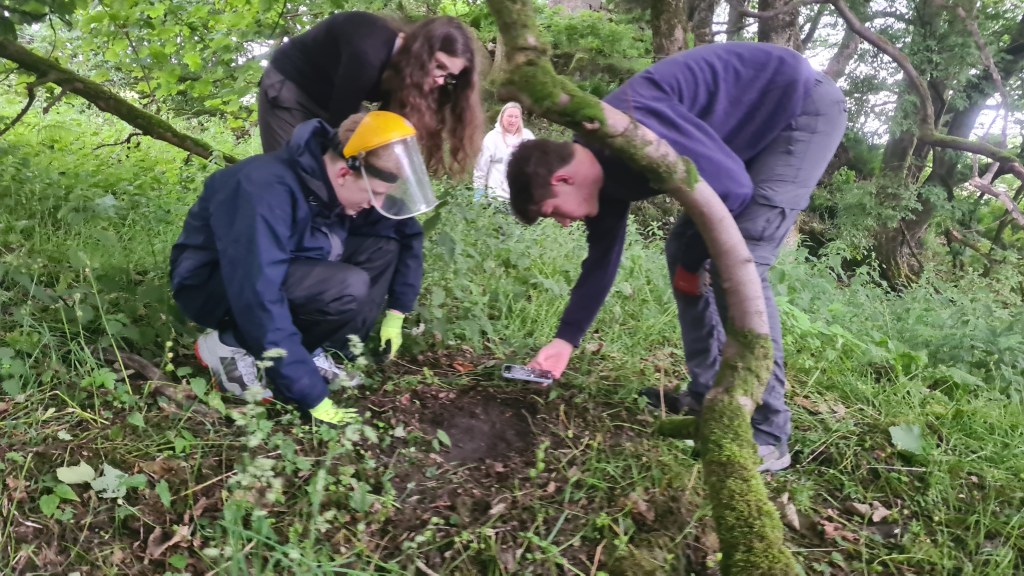
Finding the resting place of a deer in the woods

While we were doing that we saw a roe deer up above us on a slope. Only about 20m away she turned and looked at us and only then did we see that behind her was the tiniest fawn. One of the young people shouted out ‘she has a baby’ and we all watched entranced as she, with the fawn in tow trotted away. The youngster must have only been a few weeks old, it was tiny with legs far too long for its body, hopping over the ground behind its mother.

This video was taken by one of the NERD Club members

Bracken bashing and tree care

Today there were only two nests of chicks to be ringed. The final two! We had a really productive season it seems according to the preliminary results we have to wait until next month when we will clear out the nests and check whether there are any dead chicks remaining to finally conclude what the productivity of the boxes were.
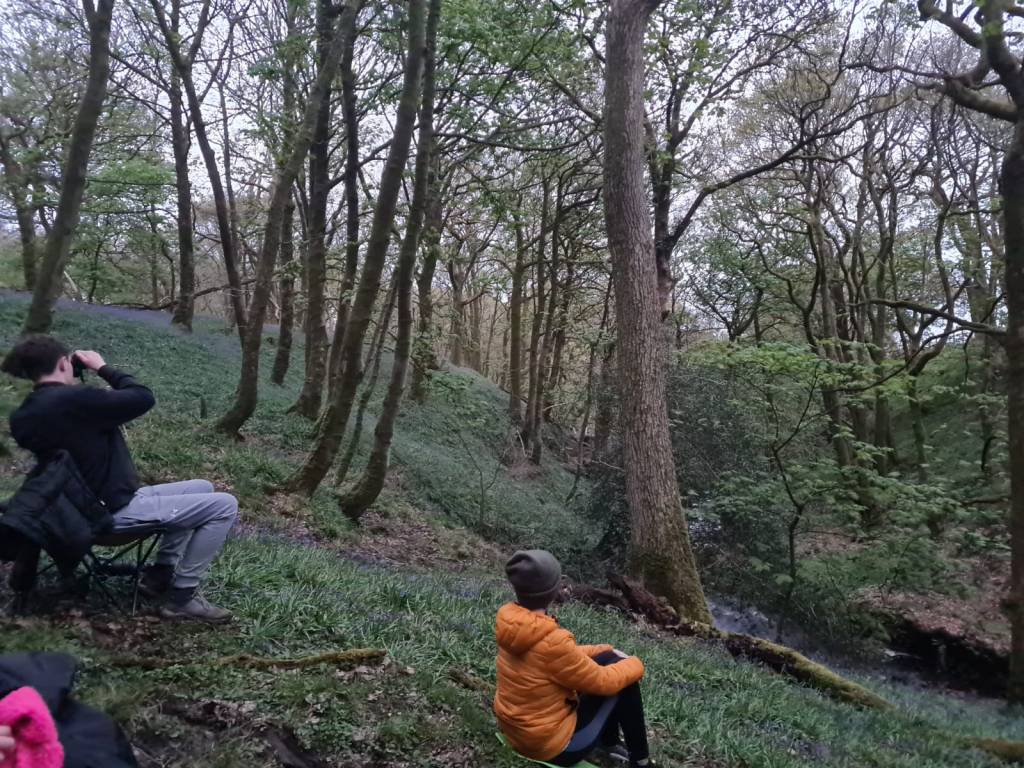
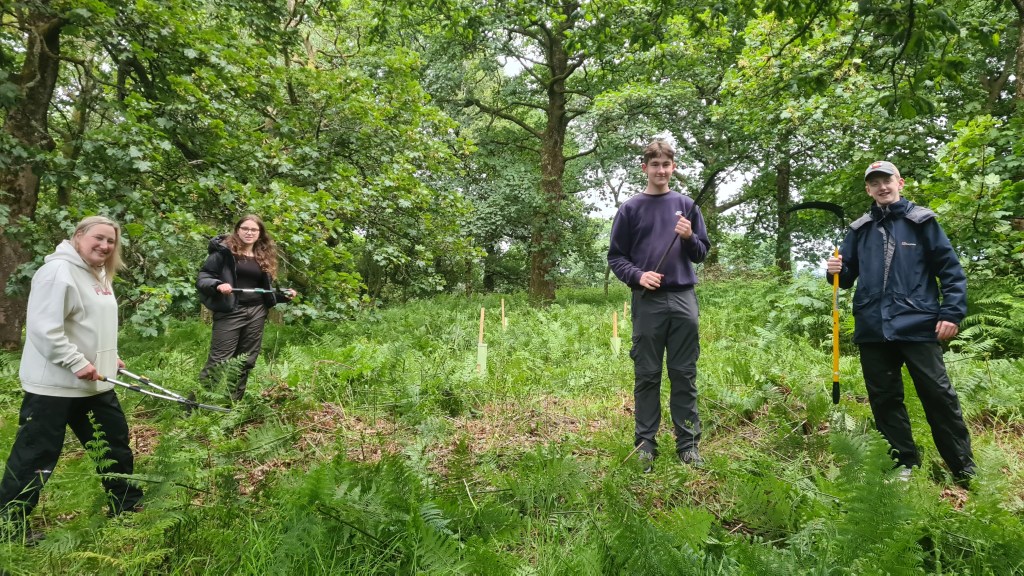
Bracken bashing – there was a lot of ground to cover!

But we do know that we had 12 blue tit nests (of which 10 fledged young) and 6 great tits (5 fledged young). There were also two boxes with tree sparrows and one fledged young. This is a very successful occupation rate with 20 out of 25 nest boxes occupied. This suggests that we can put up more nest boxes next year. We ringed 114 chicks from the 18 tit nests.

The earliest great tit laid 8th April with an average lay date of 23rd April, and an average clutch size of 7

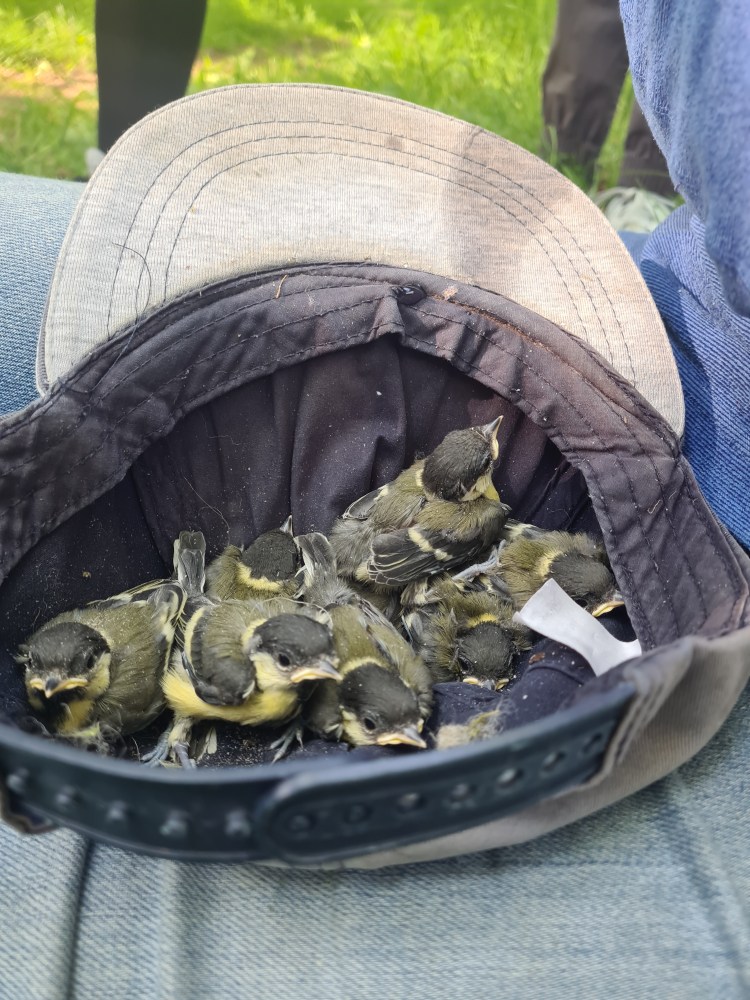
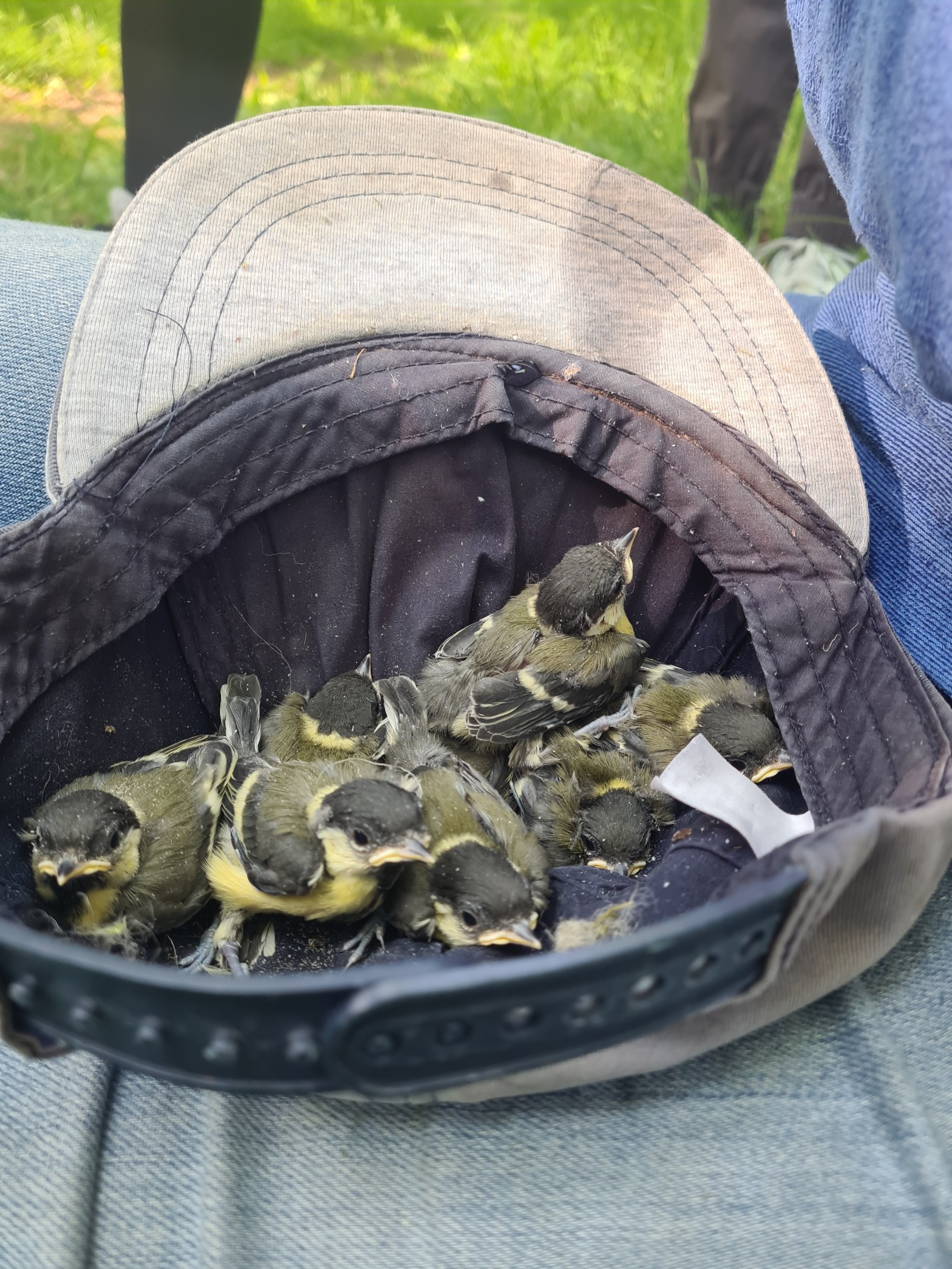
Please note – this hat has been retired from use on human heads and is just used as a place to hold the chicks!

The earliest blue tit laid 7th April but the nest failed, the average date of the first egg was 15th April with an average clutch size of 9.

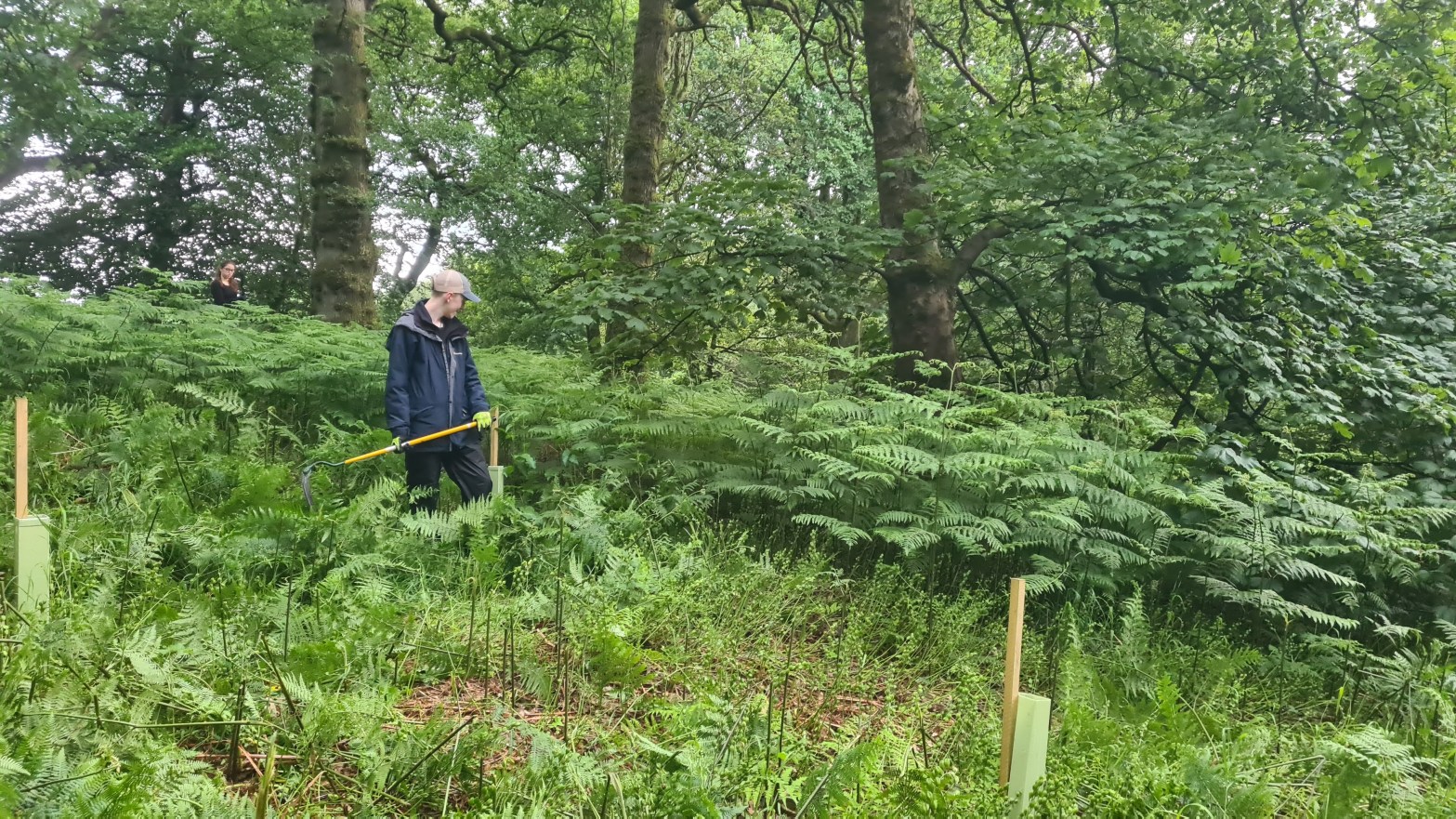
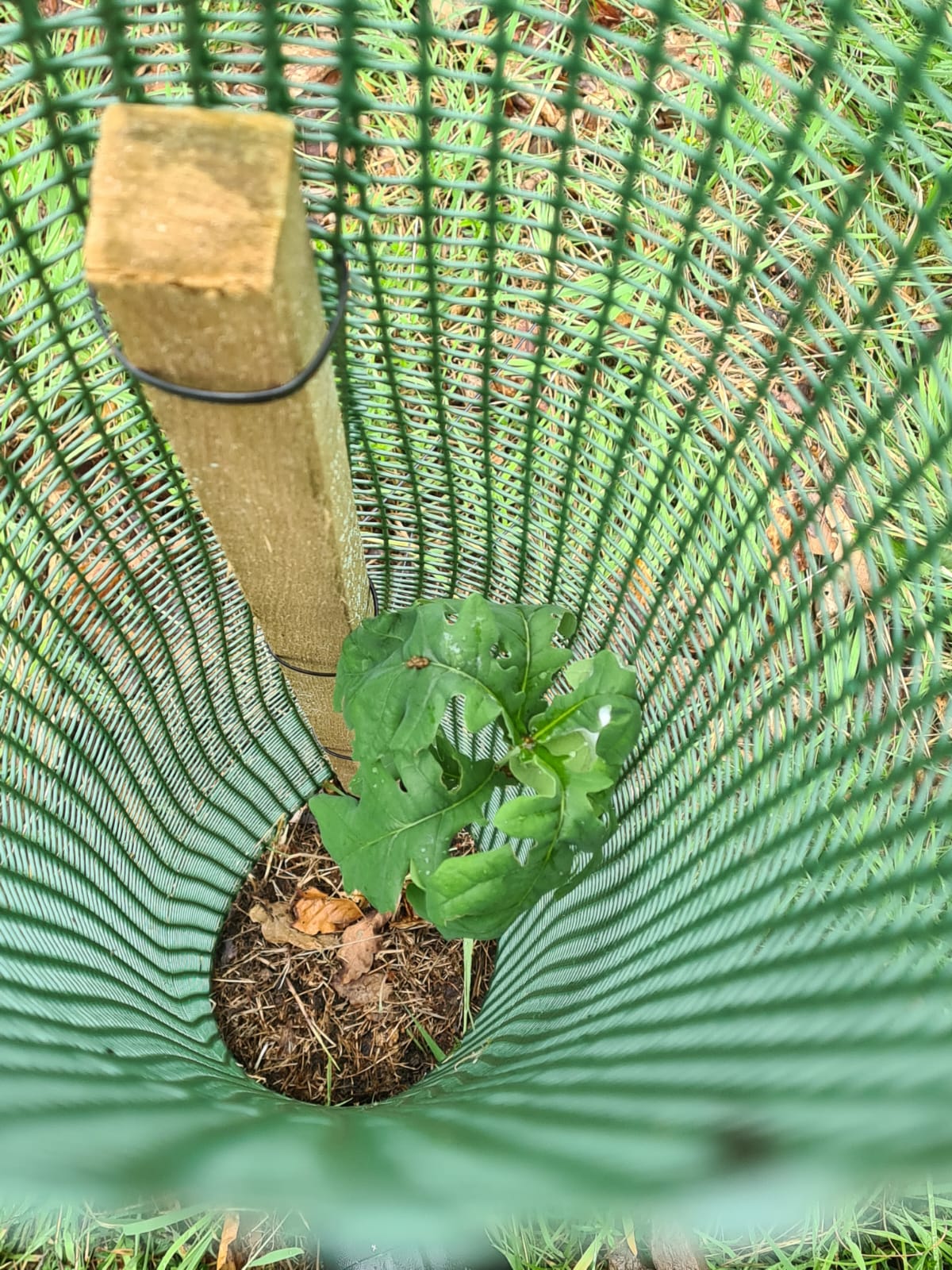
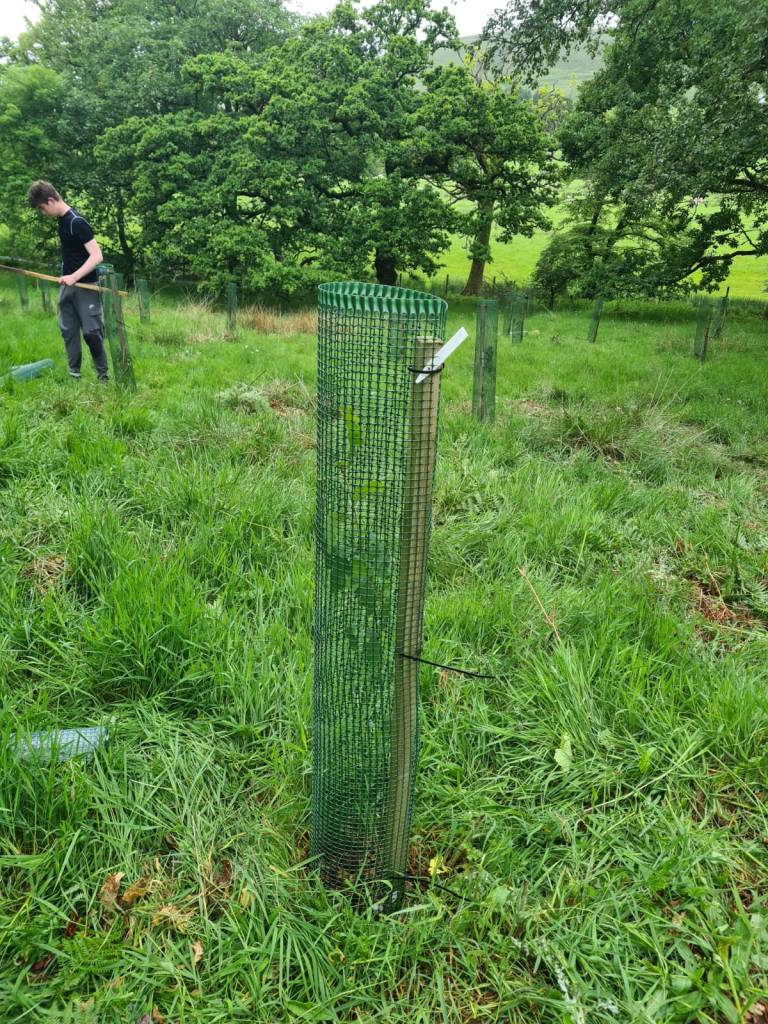
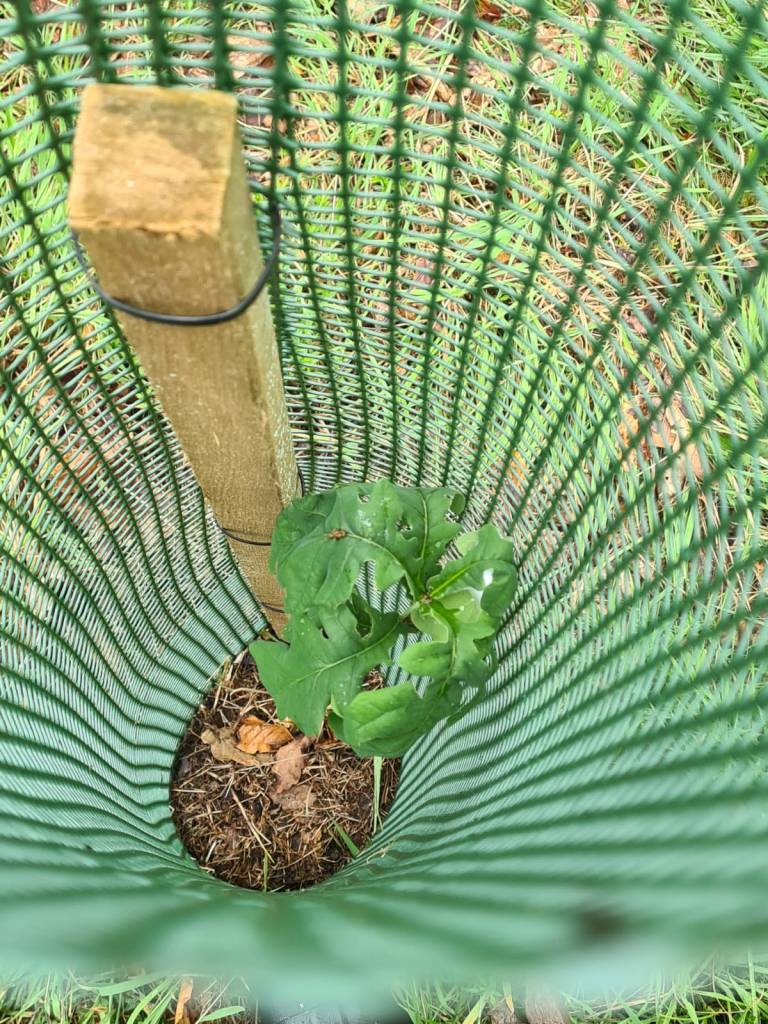
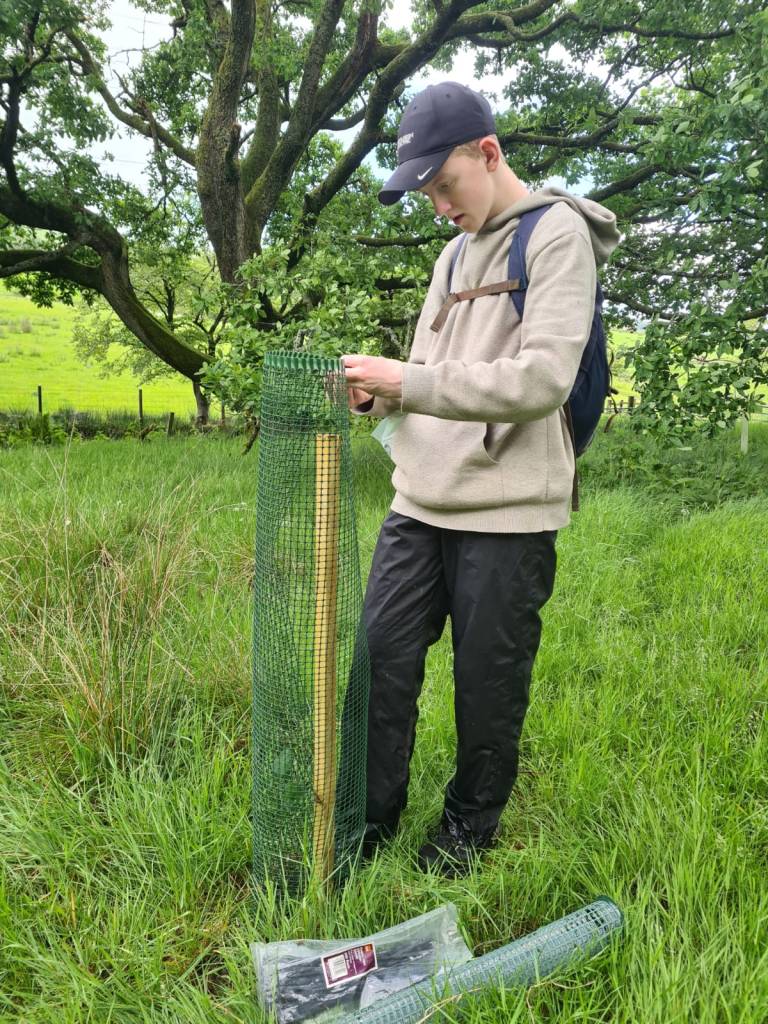
As well as the ringing and collating the data we also did some conservation work in the wood, doing a bit of care for the baby oak trees that were planted in the wood in December 2023. The trees are growing out of their 60cm tree guards and are vulnerable to browsing by the roe deer so we put taller (120cm) tree guards on and bashed the bracken all around them and in a clearing in the woods.

As we were up by the trees, an osprey flew over. |We think that they fish on the nearby loch and have a plan to go and have a look soon. The young people all said they liked the bracken bashing best of all and we cut a huge swathe through the bracken which we hope will give more light to the trees and allow more ground flora to grow that are being shaded out. To bash the bracken we used hazel sticks harvested from a hazel tree close to the house.

Baby birds and a wildlife whodunnit

May 18 2025

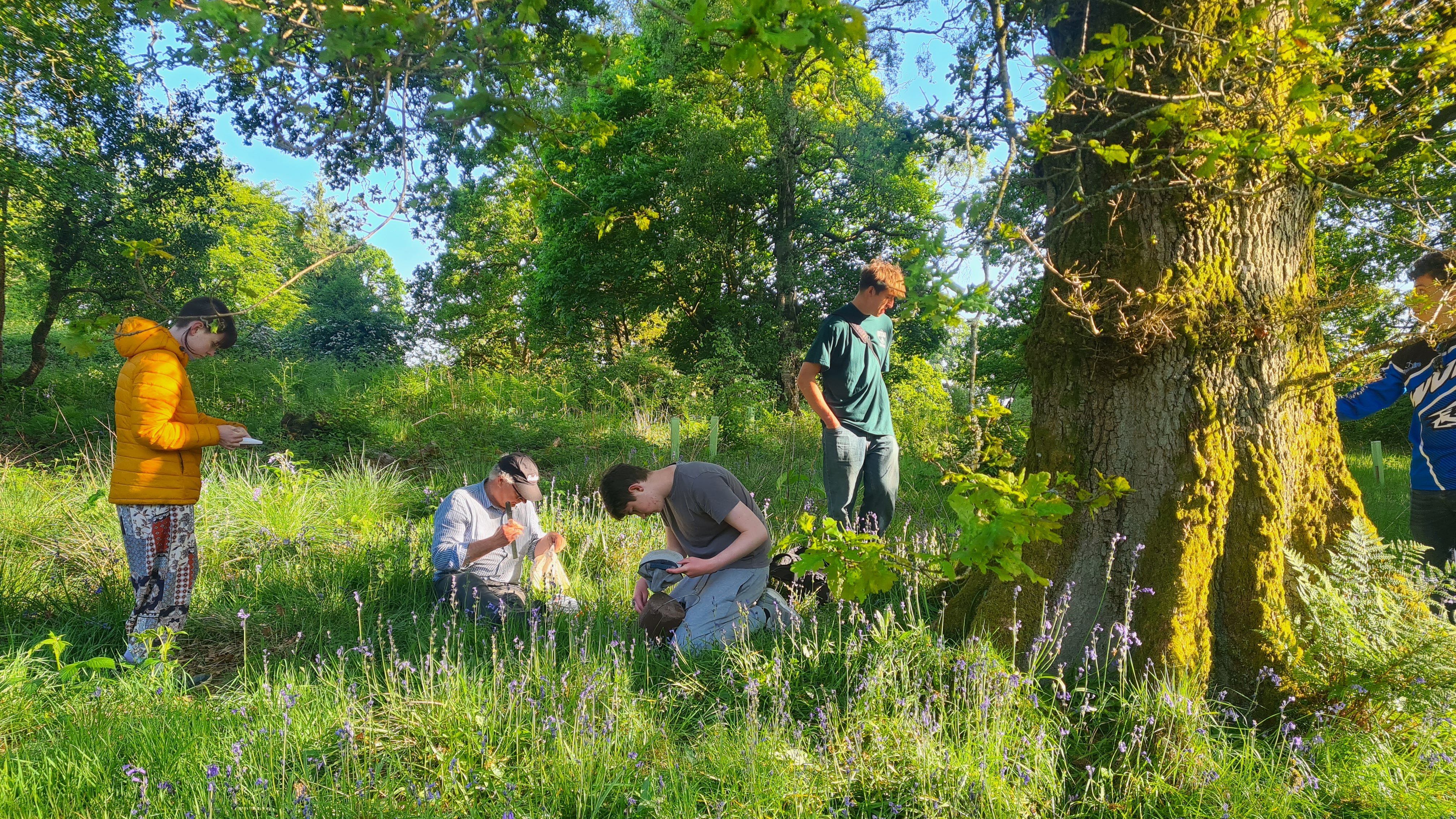
The nest boxes have now all hatched and seven of the broods were over the eight days old required for ringing so we headed into the woodland early evening on a very sunny Sunday.

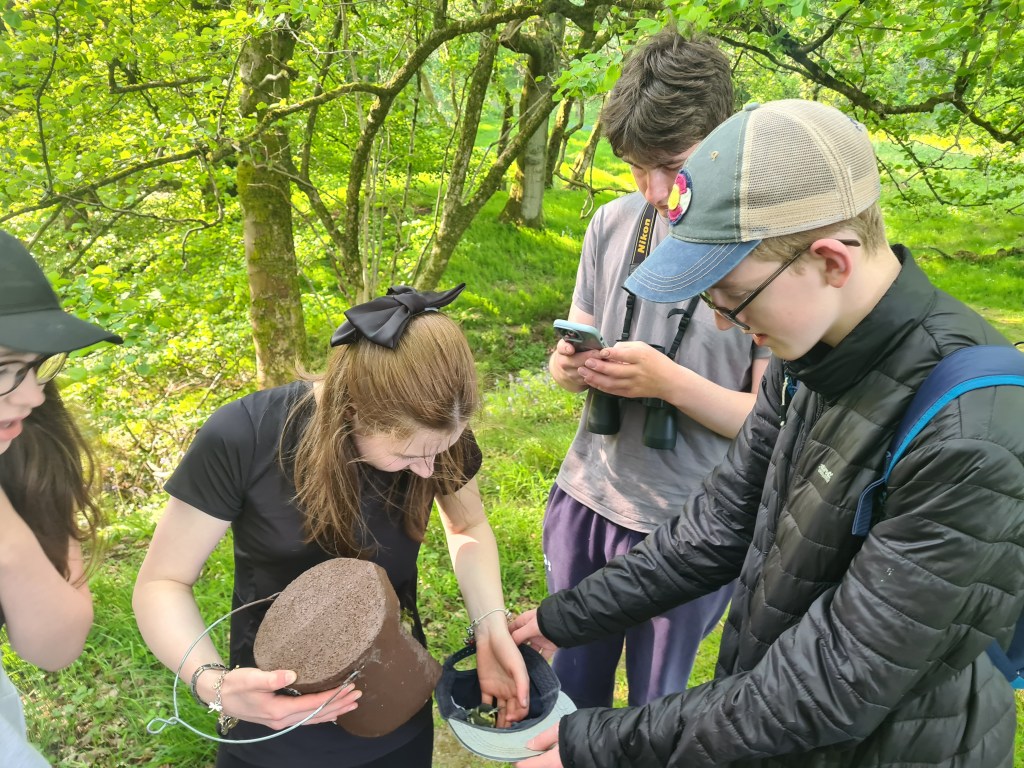
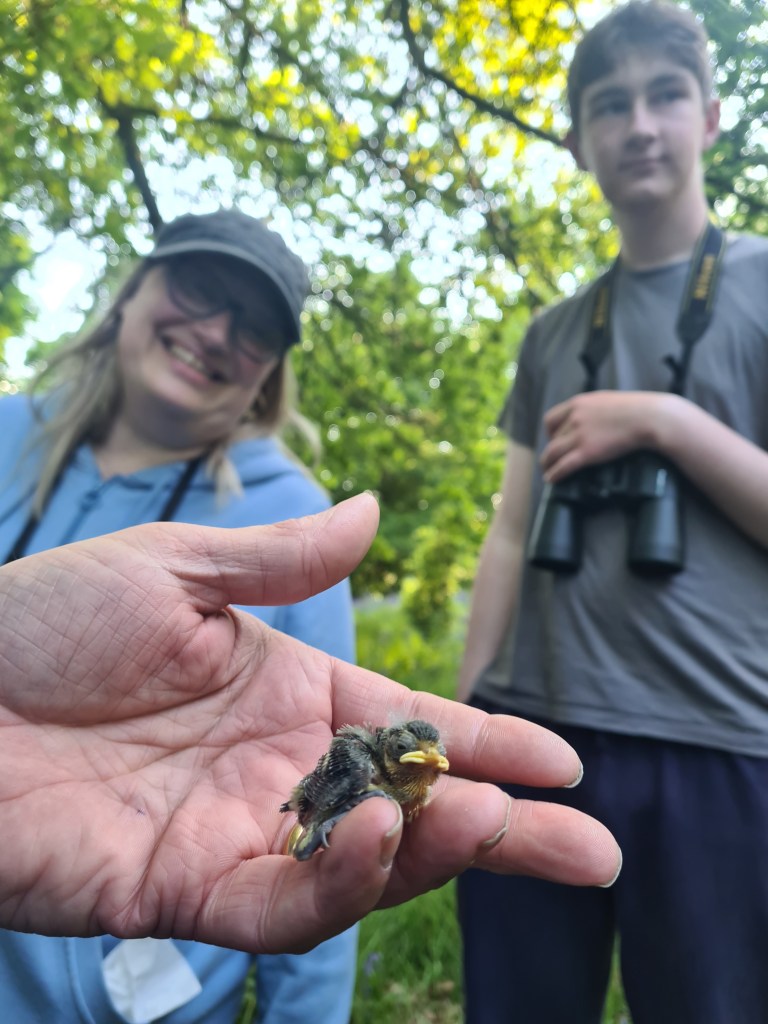
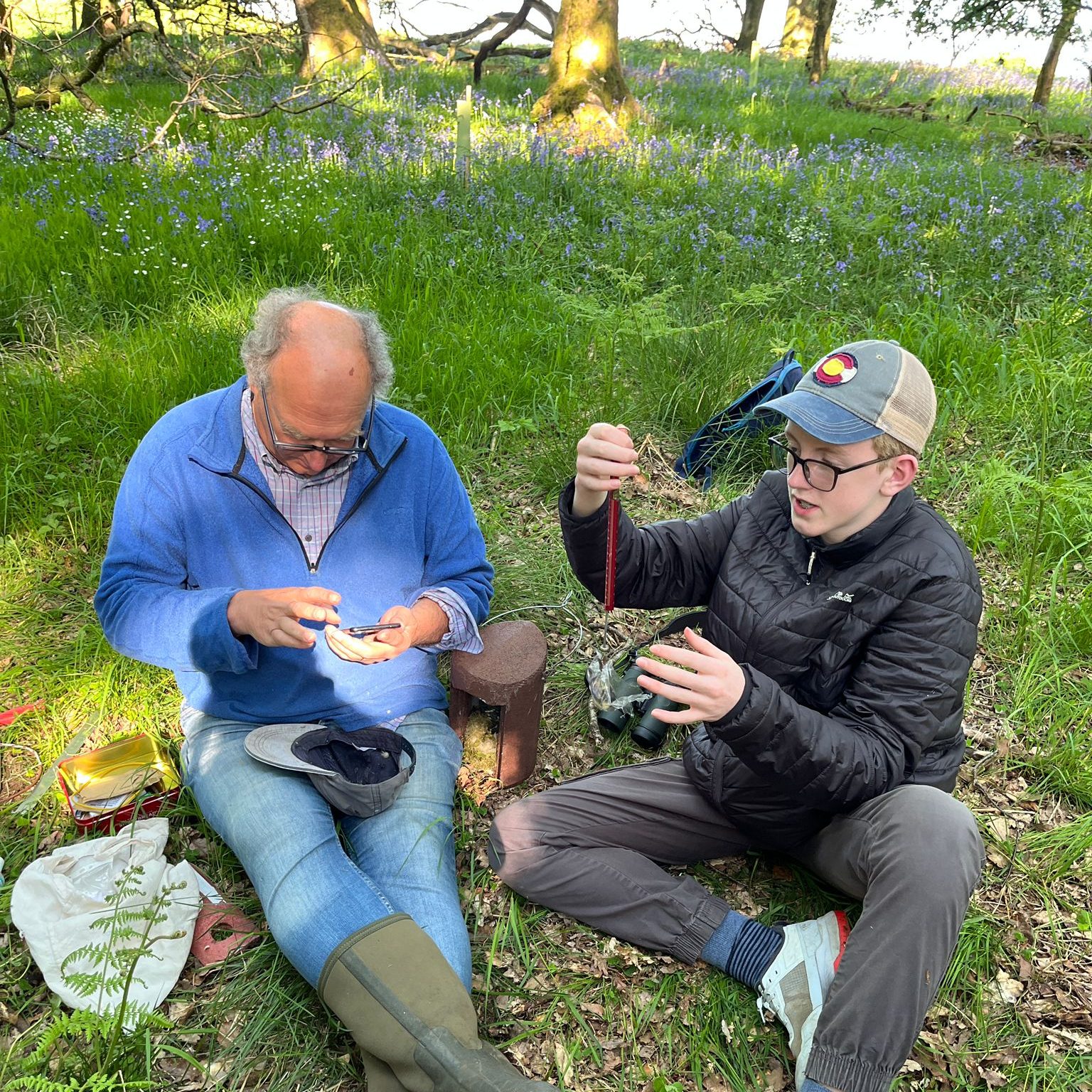
We took it in turns to do the various tasks. Ruedi showed us how to safely handle the chicks and we took each one gently out of the nest and placed them into a cap to keep them safe and together. This method worked for most broods, but the oldest of the broods were a bit flighty and kept trying to make a break for freedom so we shared them out in the group to hold while doing the ringing.

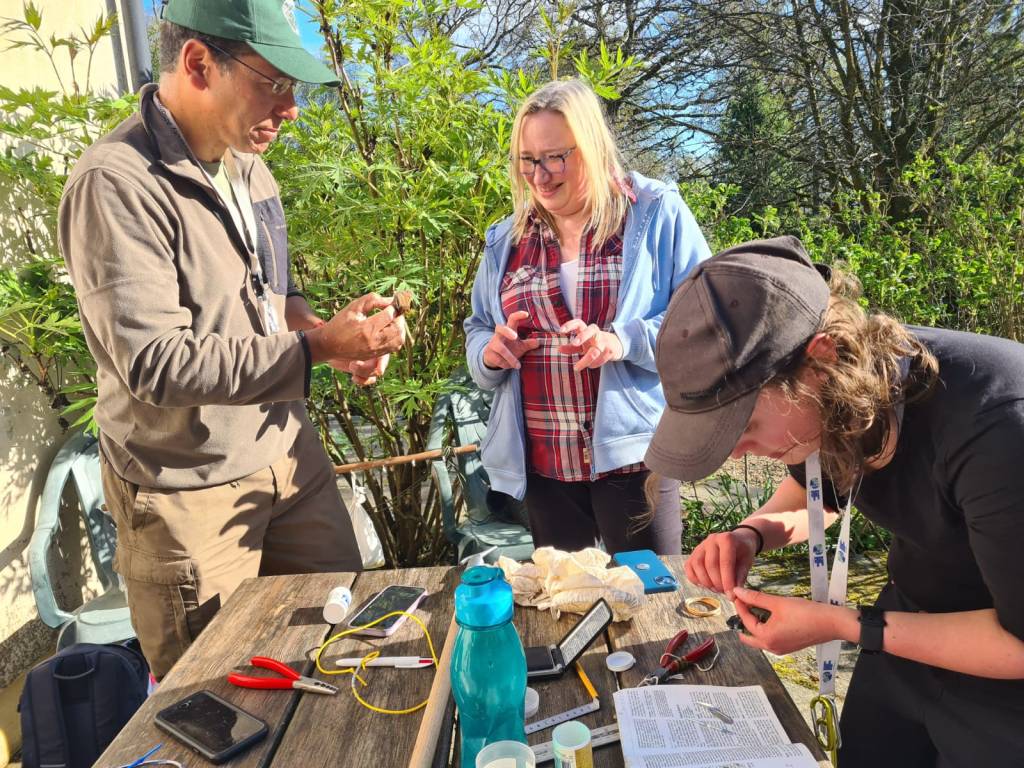
Ruedi ringed the chick and measured the wing and then one of the NERD Club members weighed the bird. We took it in turned to record the information in the notebook.

In total we ringed 54 chicks, both blue tits and great tits, taking the total ringed to 70.

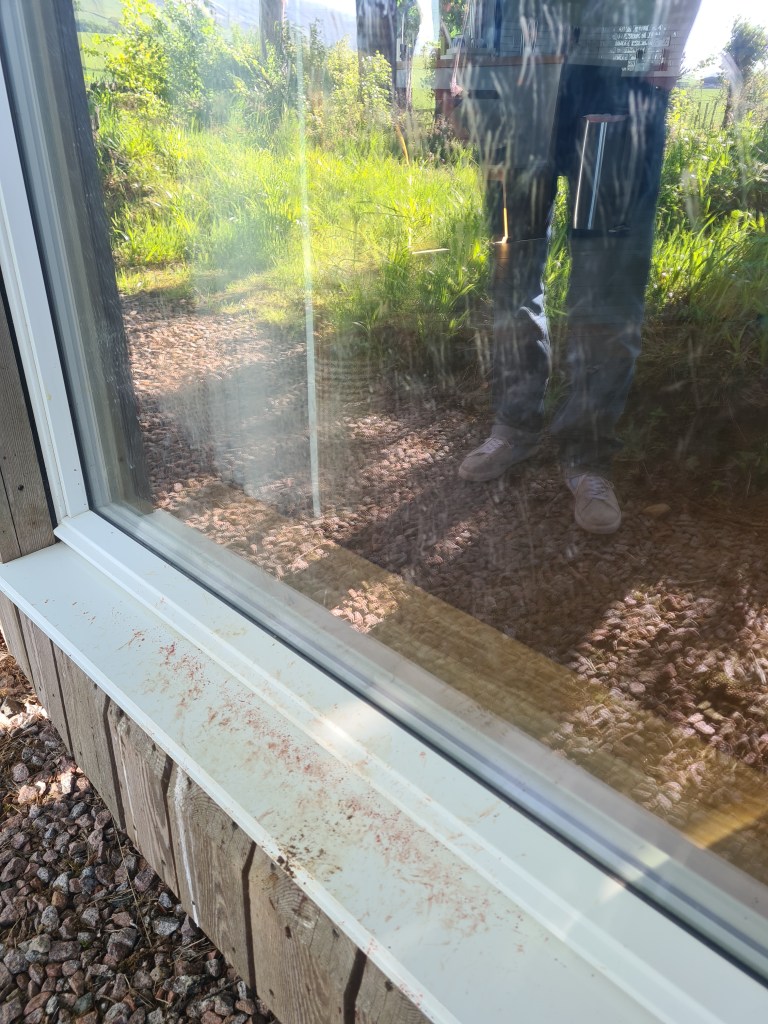
In addition we had a look at the scene of a wildlife mystery. We have been finding smeary scratches which look like blood on the windows of one of the cottages and splattering of blood on the windowsills. It’s all a bit gory. We keep wiping them off and it happens again. I have cleaned those windows three times now and the same thing happens again. We have been trying to work out what is going on – one possibility is that we had a buzzard up at our house which a couple of times managed to catch a pigeon by chasing it against the window or wall of the house by the bird-feeder. It is possible this bird has switched its hunting to the Roundhouse windows which seem to be especially reflective. However when there was a pigeon kill at our house there was always loads of feathers left on the ground, and we haven’t found any in this case.

To try and solve this mystery we have now set up a camera trap to see whether we can get any footage of what is happening and we will keep you updated!

Badgers and Ringing our nestbox chicks

May 11 2025

The first three nestboxes where eggs were laid are now old enough for ringing so we headed out to the woods with Ruedi. The window for ringing is 8-13 days for Blue Tits and 8-15 days for Great Tits. The first nests we went to were Great Tits who were 13 days old. It was a big brood for great tits and so the habitat here must be more or less ideal for them.

As we walked we saw a strand of silk with a small caterpillar dangling on the end. This was a winter moth caterpillar and one of the food sources for the baby tits. They lower themselves to the ground to pupate and then in the winter the females moths emerge and climb up the trunk of the oak up to the developing buds. The females don’t have wings but the males do, and the males will fly to fertilise the eggs which are laid right on the buds so the caterpillars appear just as the leaves are at their most tender and delicious. This gives the earliest food for our blue and great tits.

We ringed 20 chicks from the three nests and then headed out for Badger watching. We watched the badgers playing near the set and then two badgers came gamboling towards us. We had chosen our spot to sit carefully, a good distance from the set, and away from the usual badger paths. There is a big wet area of seepage across the wood so the badgers don’t really like to walk across it and that is where we were. However these two badgers were on a lower path that we hadn’t spotted. Unfortunately the two badgers came close enough to realise we were there and dashed off.

We did see badgers after this so I think that we didn’t disturb them too much which is a relief.

video taken by NERD Club leader Kim Appleton

video taken by a NERD Club member

Badgers and Bird Ringing

We had a fantastic April NERD Club meeting yesterday in beautiful weather. The bluebells are now almost fully out so the nest box checks in the woods were absolutely wonderful. 

We now have 12 nests with eggs and two at least are incubating. It seems like we have blue tits and great tits in the boxes and possibly one tree sparrow (the box nearest to the main road)

We now enter a period where some nest boxes will not be checked during incubation to avoid disturbance.

A sunny day for bird ringing with Paul Baker of the Clyde Ringing Group

Paul Baker came back to do bird ringing. He explained to us that, because the tits were close to incubation, and more vulnerable to disturbance, we would not catch birds near the feeders. Instead we set the nets in the trees to try and catch warblers, which would not have started nesting yet. 

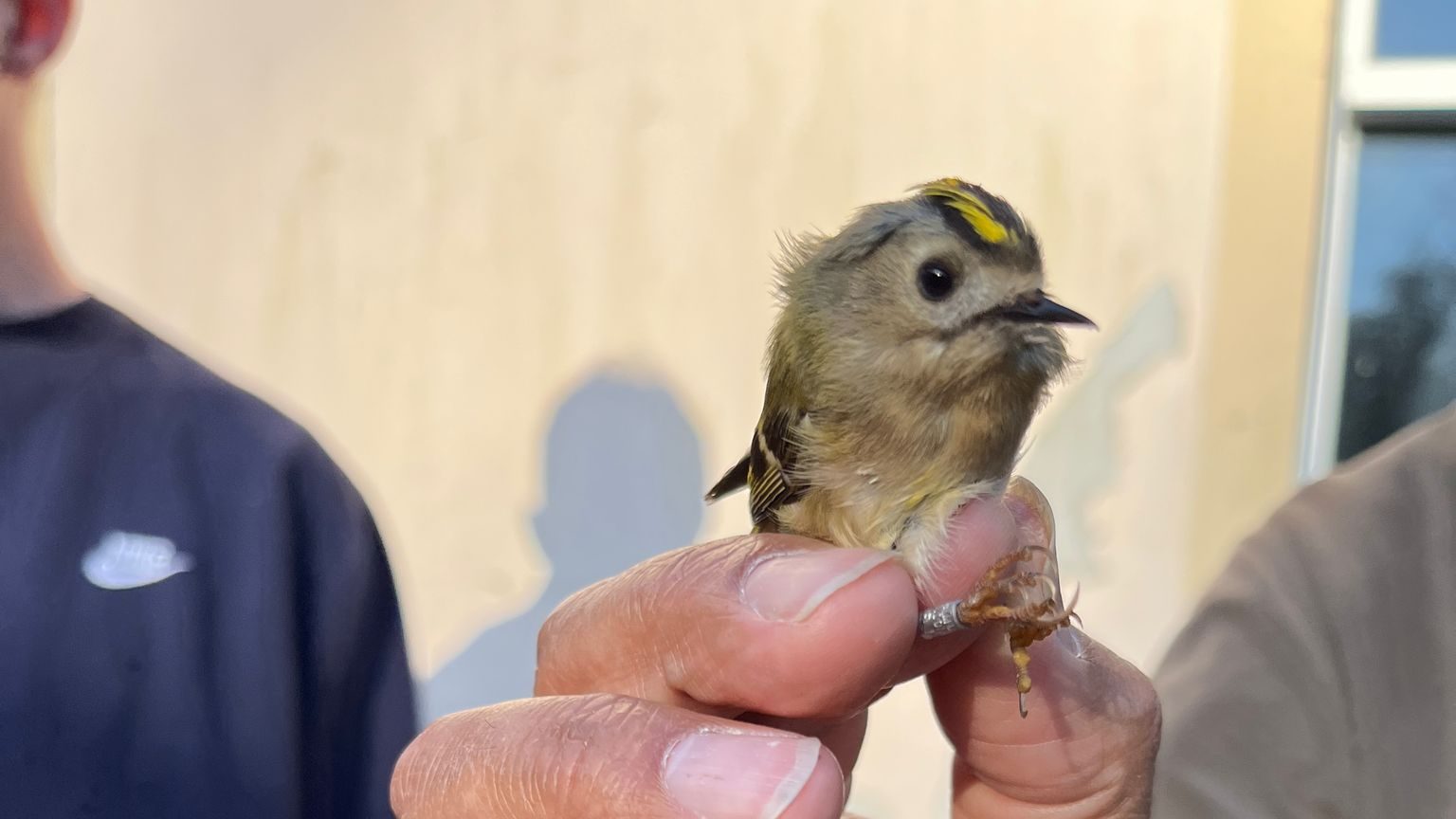
We caught a couple of wrens, two gold crests, a willow warbler – which must have been very newly arrived after its migration from Africa, a chiff chaff and a couple of long tailed tits. One of the gold crests had been caught and ringed by us in February last year. 

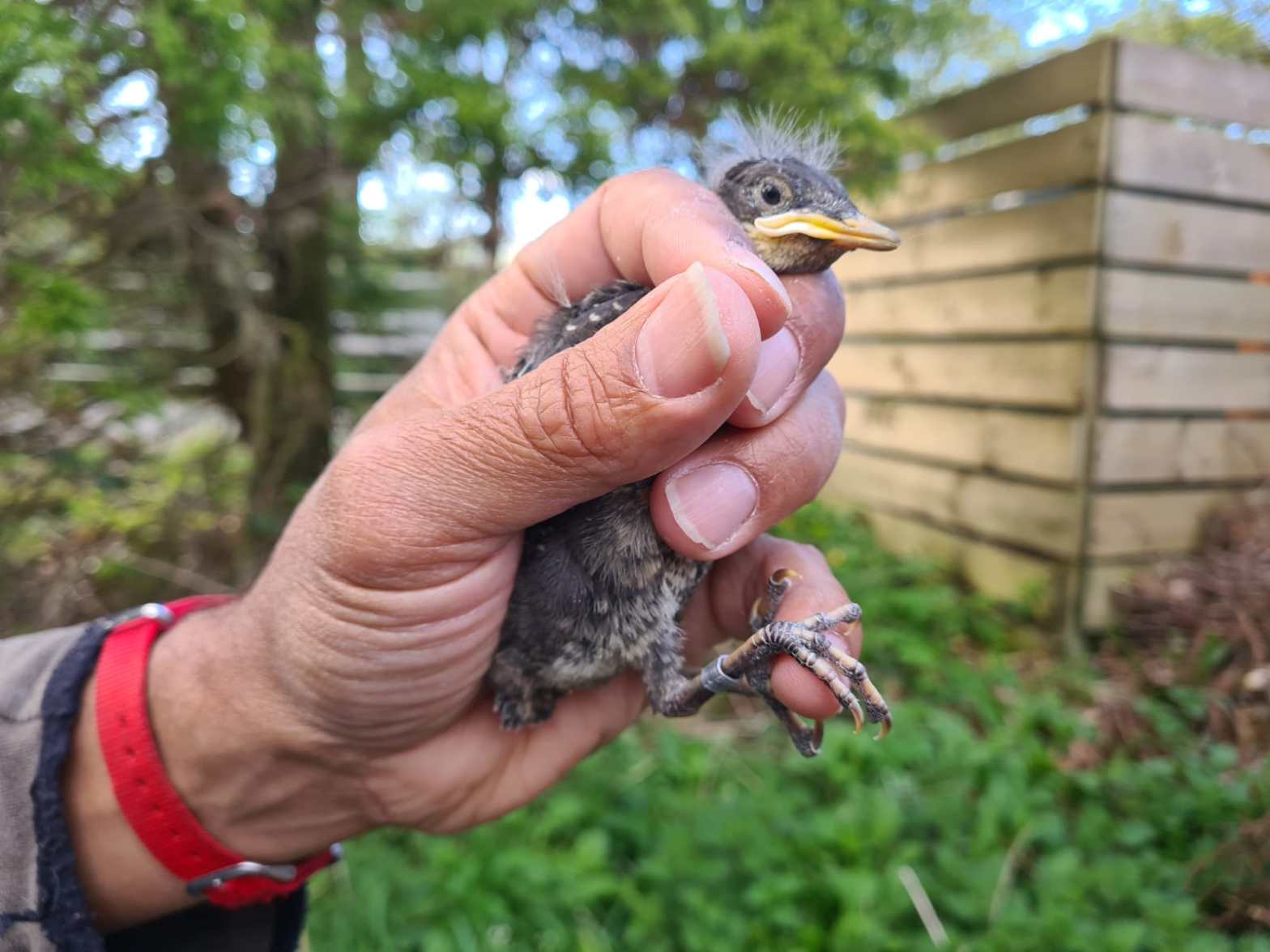
One of the Dipper Chicks

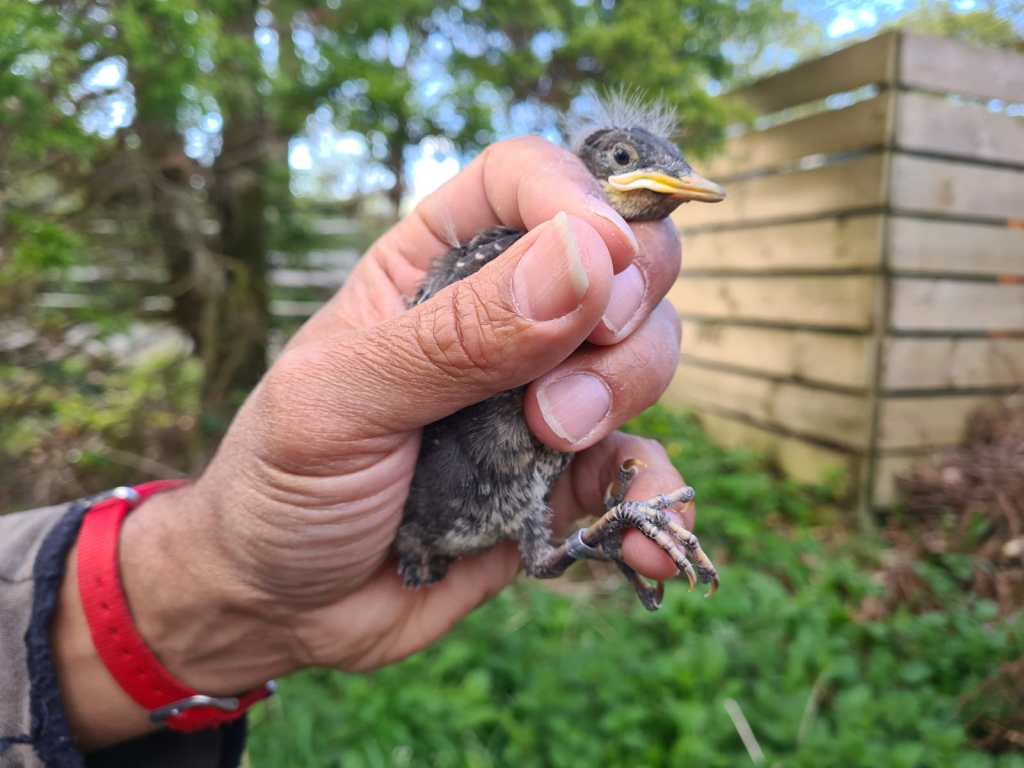
The dippers at the nest which we had gone to visit on the march meeting hatched chicks about 13 days ago and so was perfect timing to ring the babies.  Back in March we visited the nest and learned that Dippers build an entrance passage which points downwards but then has a lip to get into the nest itself (which stops the chicks falling into the water). 

Carefully putting the Dipper Chicks back in the nest after ringing

Paul and his assistant Emma carefully gathered the chicks from the nest and we ringed the cute chicks which had big yellow gapes and tufty soft feathers sticking out of their heads 

After pizza and snacks we headed out just before dusk for badger watching. We were really lucky to see at least four separate badgers. The badgers spent a good amount of time around the sett and we had a good half hour watching them before it got too dark and we headed back. We managed to make it in and out without alerting the badgers to our presence which was great. We hope to return when the babies, which will be in the set at the moment, emerging in May. 

We watched a badger come out of the sett and lie back and scratch his belly – One of our NERD Club members got this photo.
Badger watching at dusk

Nest box checks and iNaturalist: March meeting

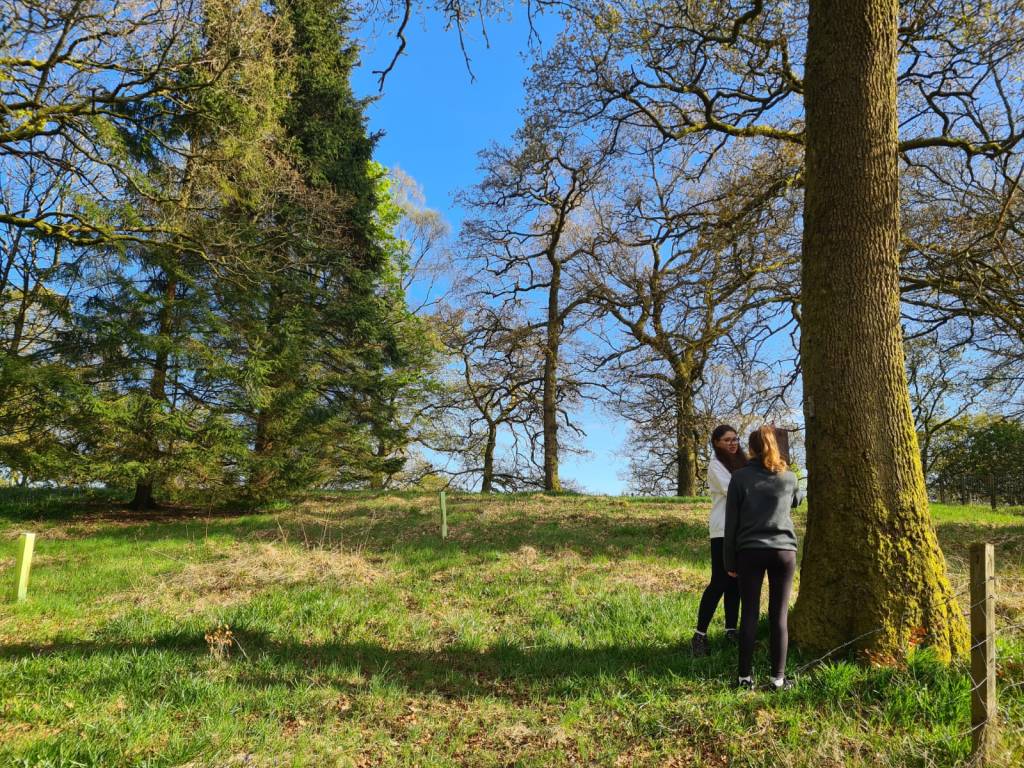
We had a great meeting on 22 March. Parents and young people came together for a briefing on how to do the nest box checks and we did a full check of the nest boxes. Out of 25 boxes 6 already had moss in significant volume so that is good news for early in the season.

We expect the first eggs around the second week of April.

We discussed the legalities of the Wildlife and Countryside Act. The wildlife and countryside act says it is illegal to destroy or harm a nest or eggs or to take the nest or eggs. We are checking the nest boxes and so we are not harming the eggs or chicks. When it comes to handling the chicks and ringing them this needs to be done by a licensed person. Ruedi has a license to handle and ring blue and great tits at the nest and so he will be doing this but we can arrange a meeting so that we can all accompany him!

We also went through various safety things and agreed on a rota for the checks which will run from the start of April to the end of May. Once the birds are incubating, nest checks will stop until we expect hatching to occur.

Aimee Moretti of The Conservation Volunteers joined us to help us with our knowledge of iNaturalist and the young people went off to record Moss – using the moss worksheets produced for the last meeting.

They also found twenty or thirty frogs spawning in the pond which was really exciting….It is DEFINITELY Spring!

Mossing and more rhodie bashing

NERD Club February meeting.

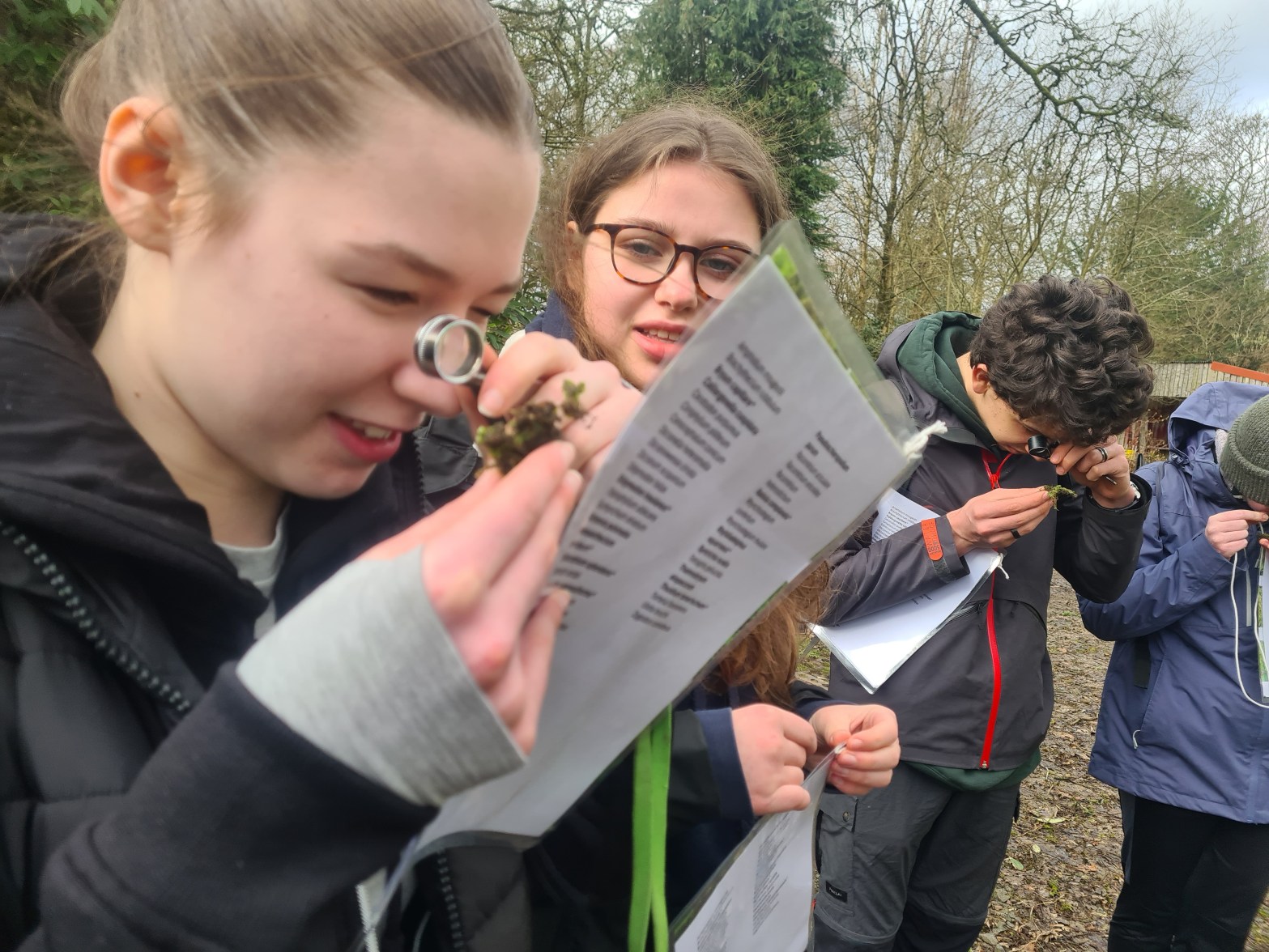
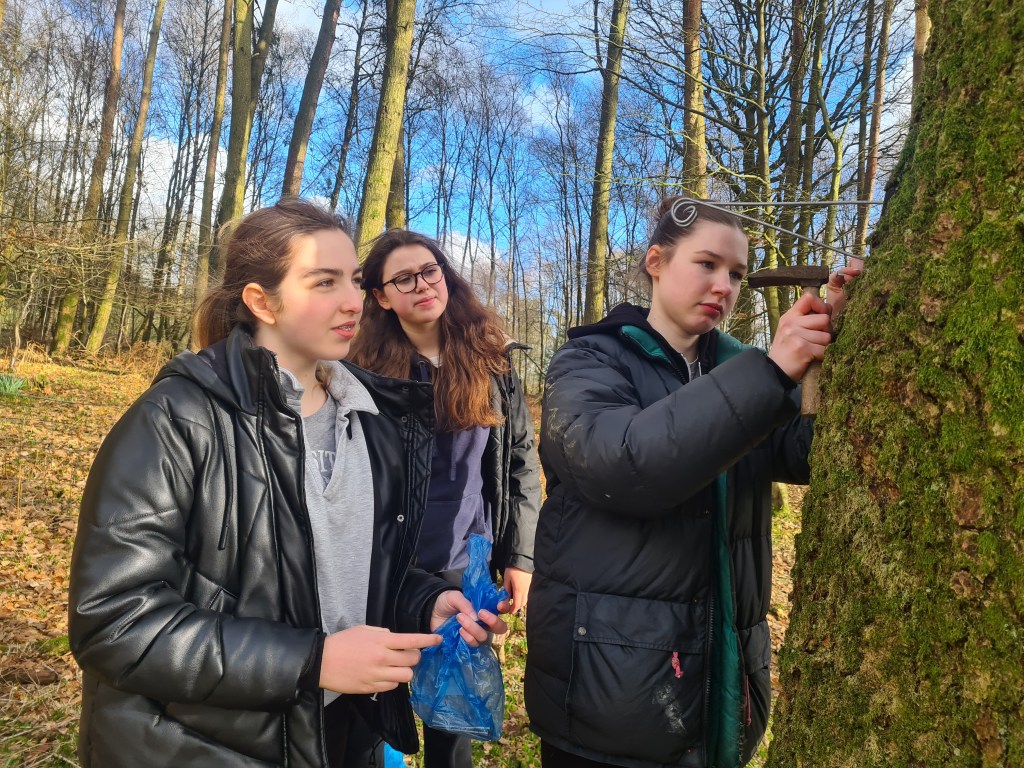
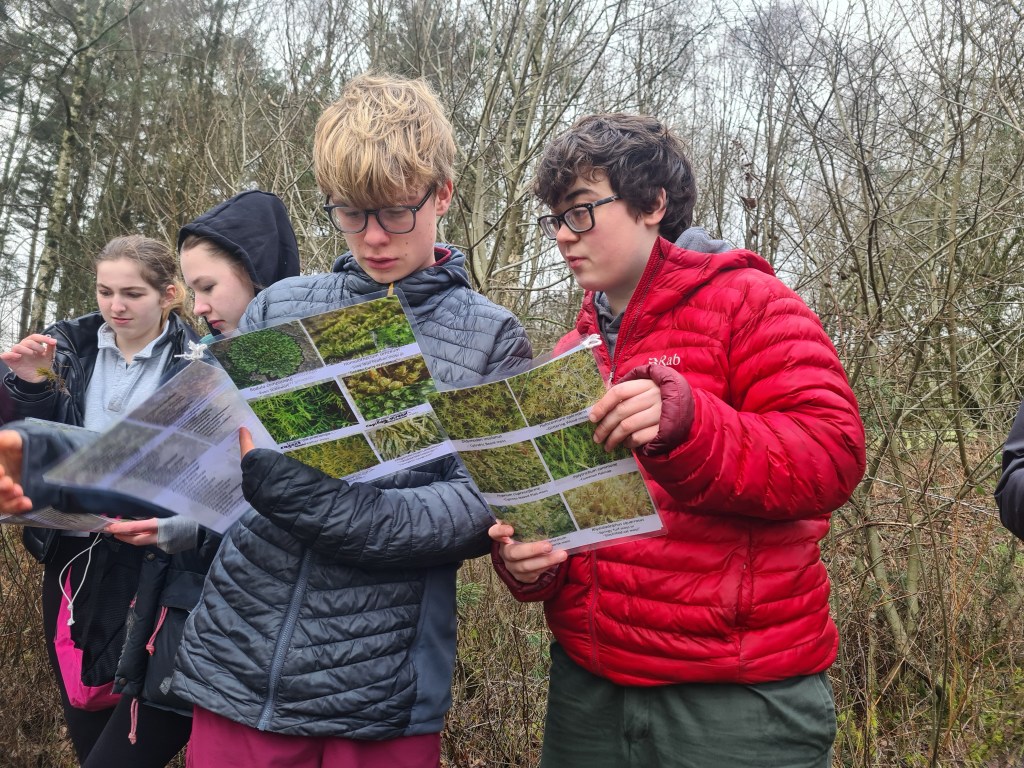
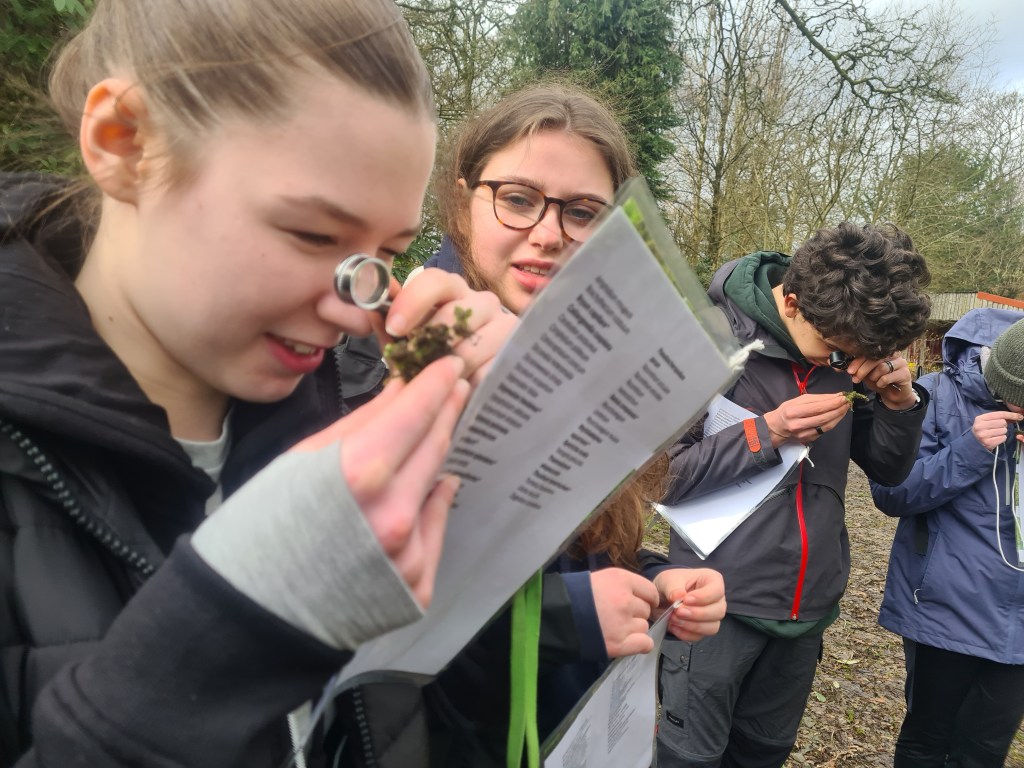
NERD Club are ‘Naturalists and Ecologists Recording data’ – a group for young naturalists held at Upper Woodburn. Thank you very very much to Lyn Jones who led such a brilliant session on mosses in the morning. We used an ID sheet of a few interesting mosses and did a bit of a moss scavenger hunt. It was amazing how good the young people were at managing to find the mosses on the sheet and pick them out from all the other mosses around the place.

Please do put any moss pictures with your IDs on inaturalist. I hope that now I have worked out how to add you all properly, your observations will come up on the group.

After the moss walk, and the microscope exercise, we headed back out to hang the nestboxes on the proper hangers that eventually arrived. This will keep the nestboxes hanging free from the tree trunks and help keep them dry. We saw evidence that birds were already roosting in at least 5 of the nestboxes which is a good sign. We also popped in to see the dipper nest under the bridge and saw it had built a new nest! I hope they breed again this year – we can keep an eye on them to see how they progress.

After that we had a productive couple of hours pulling our rhododendrons and making a huge fire to burn the ones we took out at our December meeting.

Putting up the nest boxes

NERD Club January meeting. We had a great meeting today – thank you to all who came along!

Map for Nest Boxes

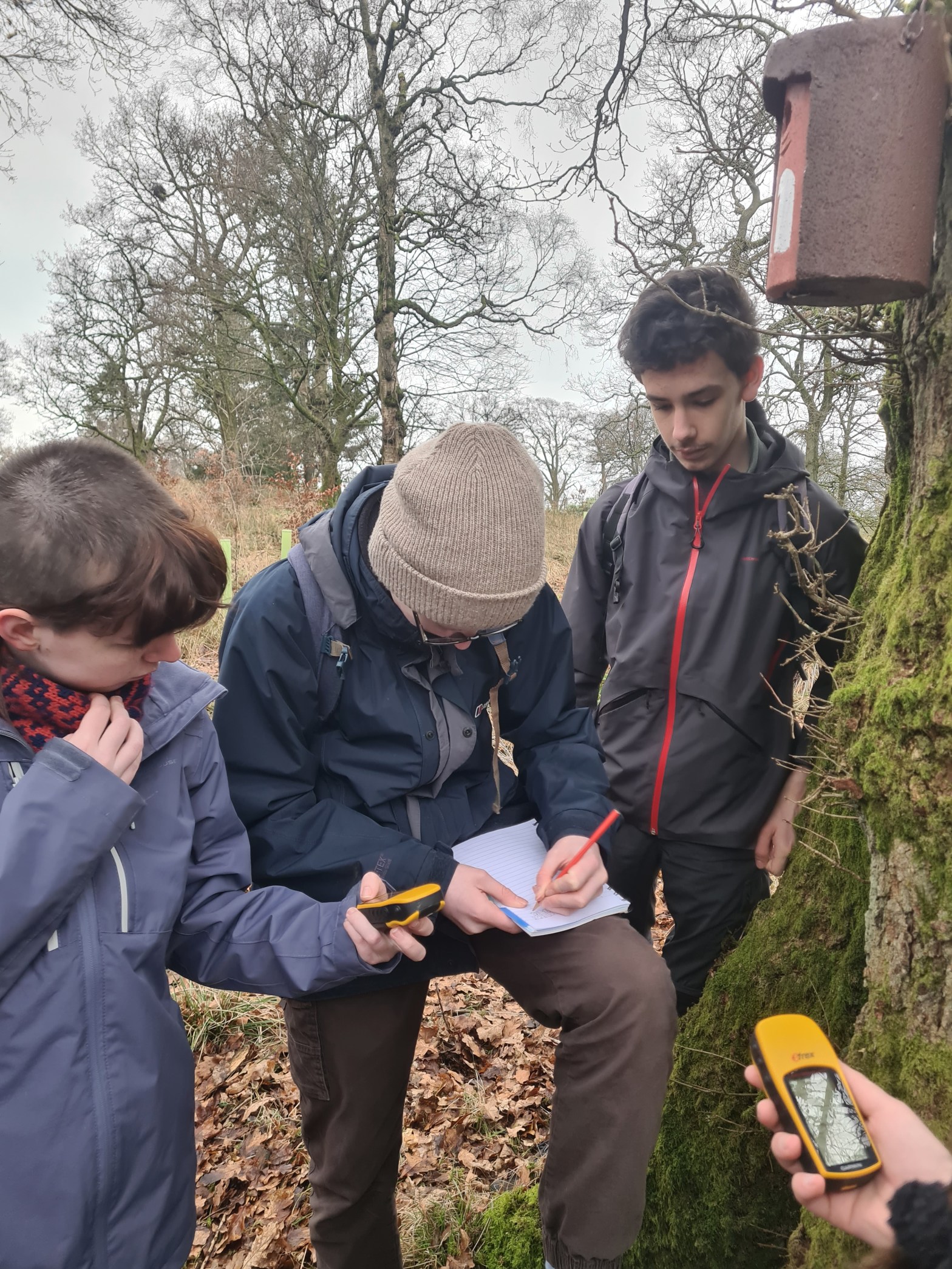
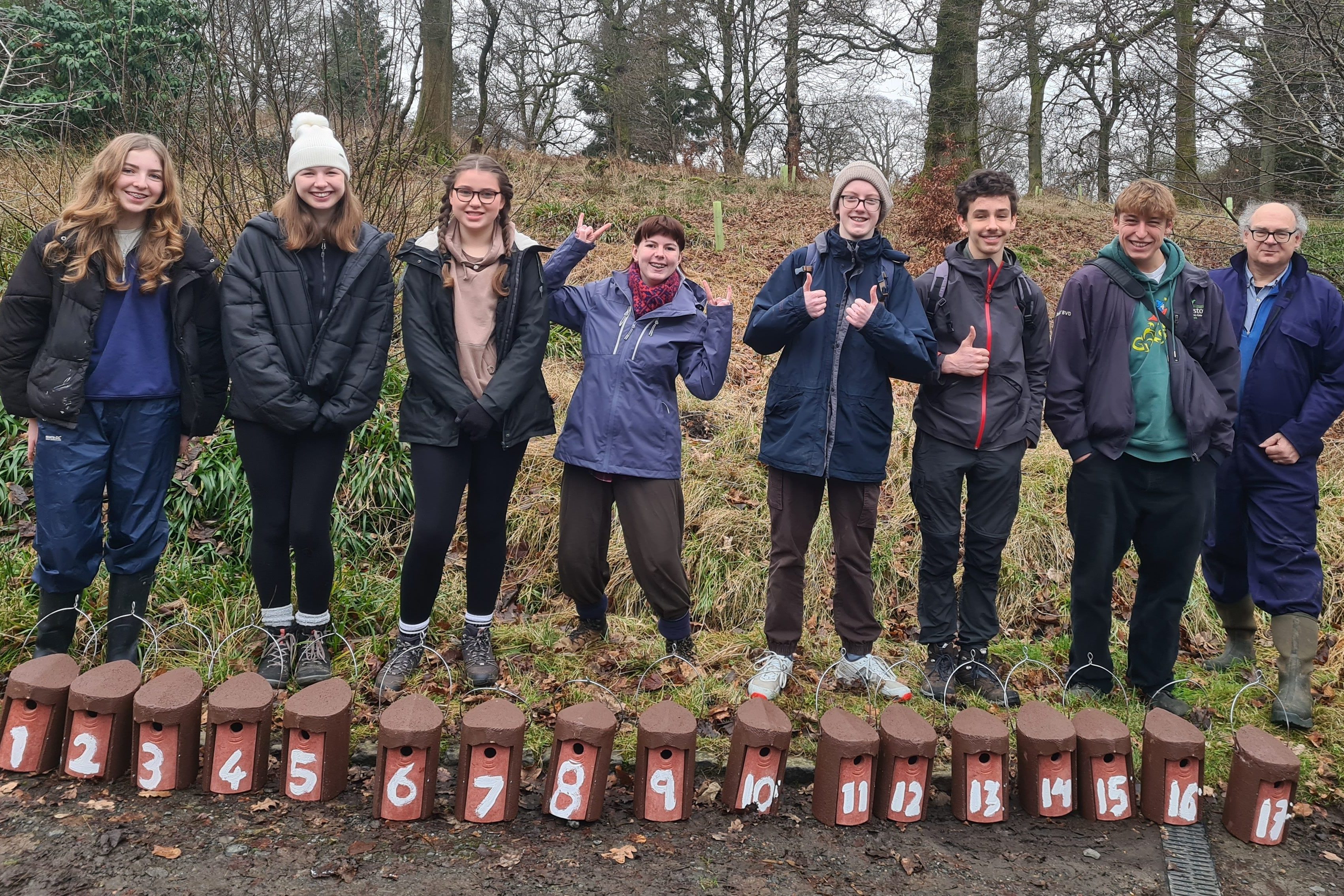
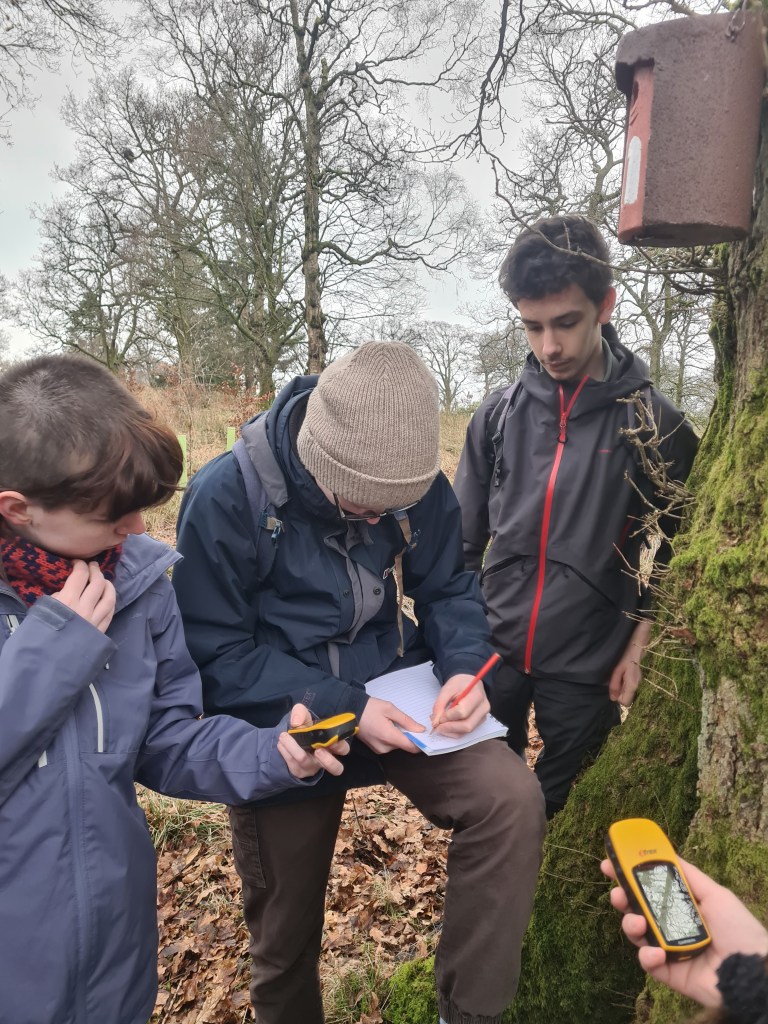
We managed to get all 25 nest boxes up and we recorded their positions on GPS and in a dedicated google map – you will all have an invitation to the googlemap by email.

When we are doing the nestbox checks, which will start in late March/April this is where we can all edit this google map and so we will be able to add information about egg and chick numbers. It means that everyone in the group will be able to see what is happening at the nestboxes and get an alert when information is added.

Nestbox checks

For the weekly nestbox checks we will get a rota up of young people going out to check – either in pairs or with a parent. An important date for the diary will be the induction for nest box checks which will be with young people and parents (if possible), we will go round all the nestboxes as a training for the nest box checks and also arrange a rota for the checks, and talk about safety (of human and nest!)

After we’ve done the induction parents can decide whether they’d be happy for their young person to do the check with other young people, or whether they’d like to take part too.

We think there will be enough numbers that teams will do only two next checks between start April and early June. and these can be flexible one day, either side of the set date. And should take between an hour and two hours, depending on whether there are eggs/nestlings.

i-Naturalist

We set up an iNaturalist project where we can all log our findings to. Everyone should already have it on their phones who came along. – as we set it up together

Please use the next month to try out entering some records – to start with just enter records of things that you definitely know what it is – as we are learning how to use the system. One thing that it important, which we didn’t discuss at the meeting, was that when you put in location, especially if it is in your garden/school, put in locations as ‘obscured’ This means that the publicly available data won’t have an exact location and just gives a rough indication. I think we should get into the habit of always using ‘obscured’ when we enter our data. If it is something that is a protected species – Badger for example – you should use ‘private’. This means that the data goes onto the database and can be used for research but people would have to request the location if they want to use it. This means that it doesn’t give away the location of places like badger setts.